Vidarbha Vistaar – Exploring Forests, Water and Indigenous Systems of Amravati
A four-day experiential learning journey organised by Aitihyaka Experiences in collaboration with Somaiya Vidyavihar University and CASCADE, exploring Vidarbha’s cultural heritage, traditional water systems, prehistoric rock art, forest ecology, wildlife conservation, and agricultural livelihoods through field-based learning and expert interactions.
Introduction
Vidarbha Vistaar – Exploring Forests, Water and Indigenous Systems of Amravati
A four-day experiential learning programme connecting cultural heritage, ecology, traditional knowledge and local livelihoods.
5–8 October 2026 | Amravati, Maharashtra
The Work
Programme Overview
How do communities adapt to their environments? What can historic water structures, rock art, forests and agricultural practices reveal about the relationship between people and landscapes?
These questions shaped Vidarbha Vistaar, a four-day experiential learning programme organised and conducted by Aitihyaka Experiences in collaboration with Somaiya Vidyavihar University and CASCADE (Centre for Achieving Sustainable Climate Action, Development and Engagement).
Through field visits, expert interactions, practical activities and group documentation, students from diverse academic backgrounds explored the interconnected cultural and ecological landscapes of the Amravati region.
Water Systems and Cultural Heritage
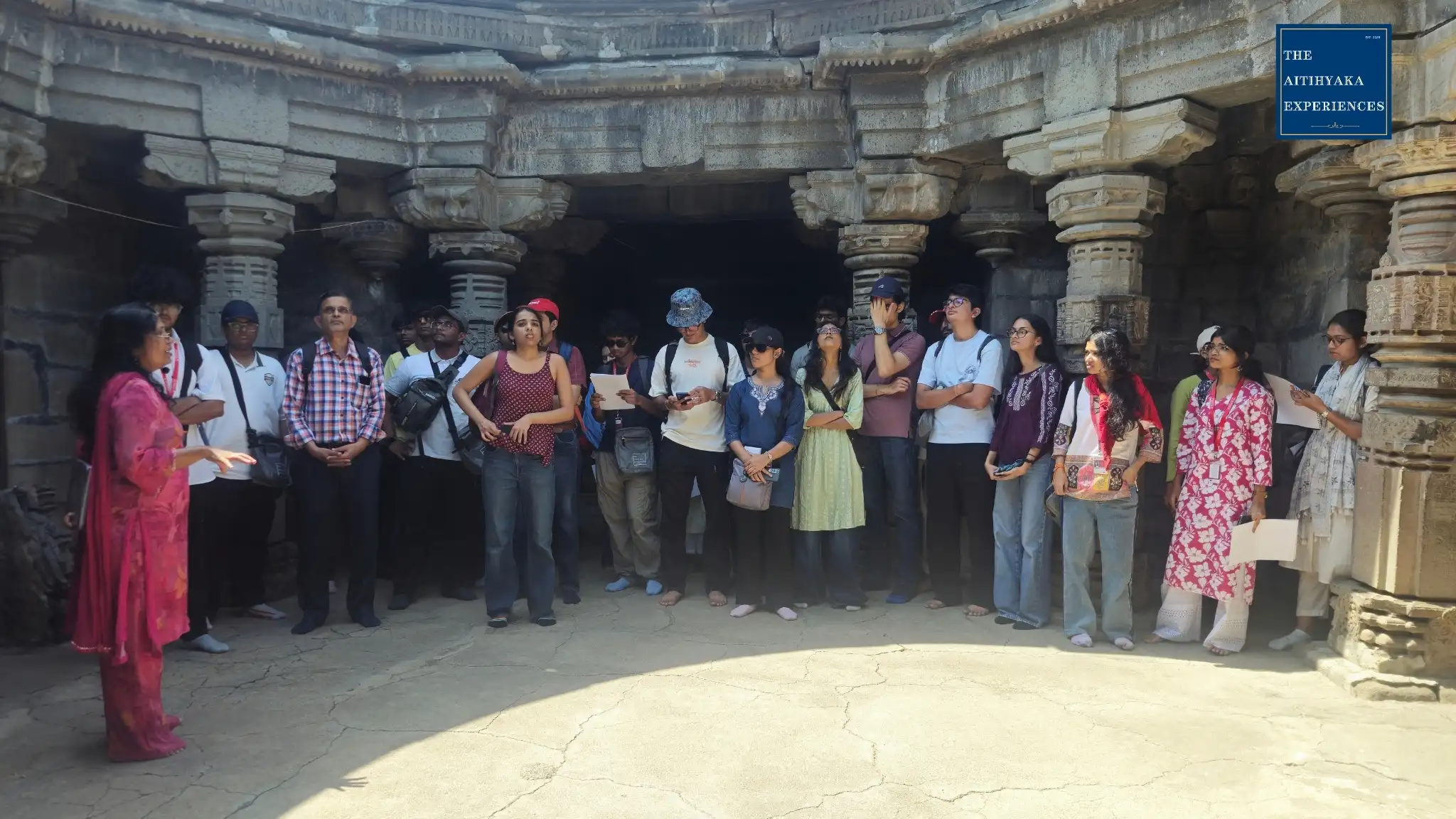
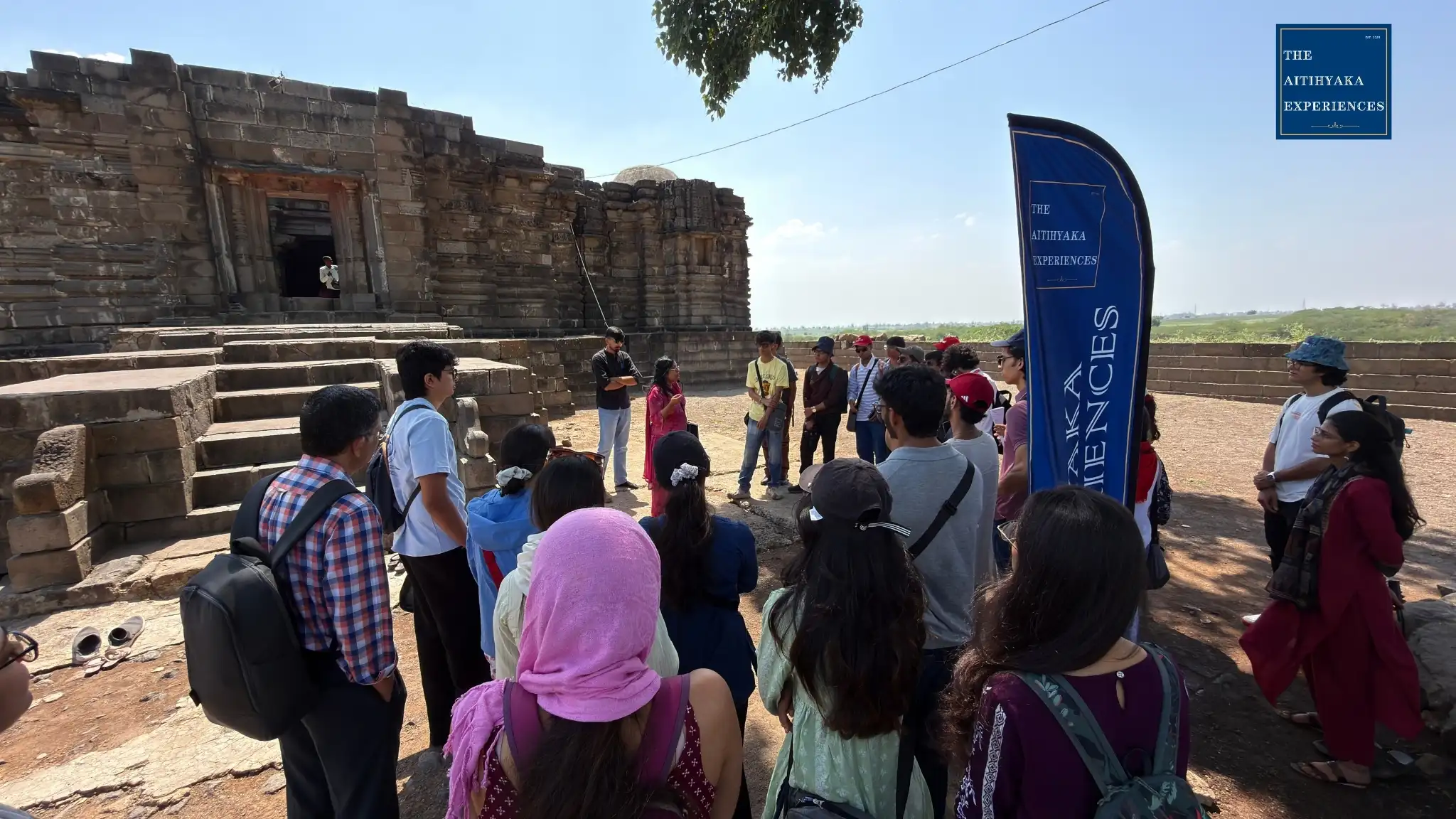
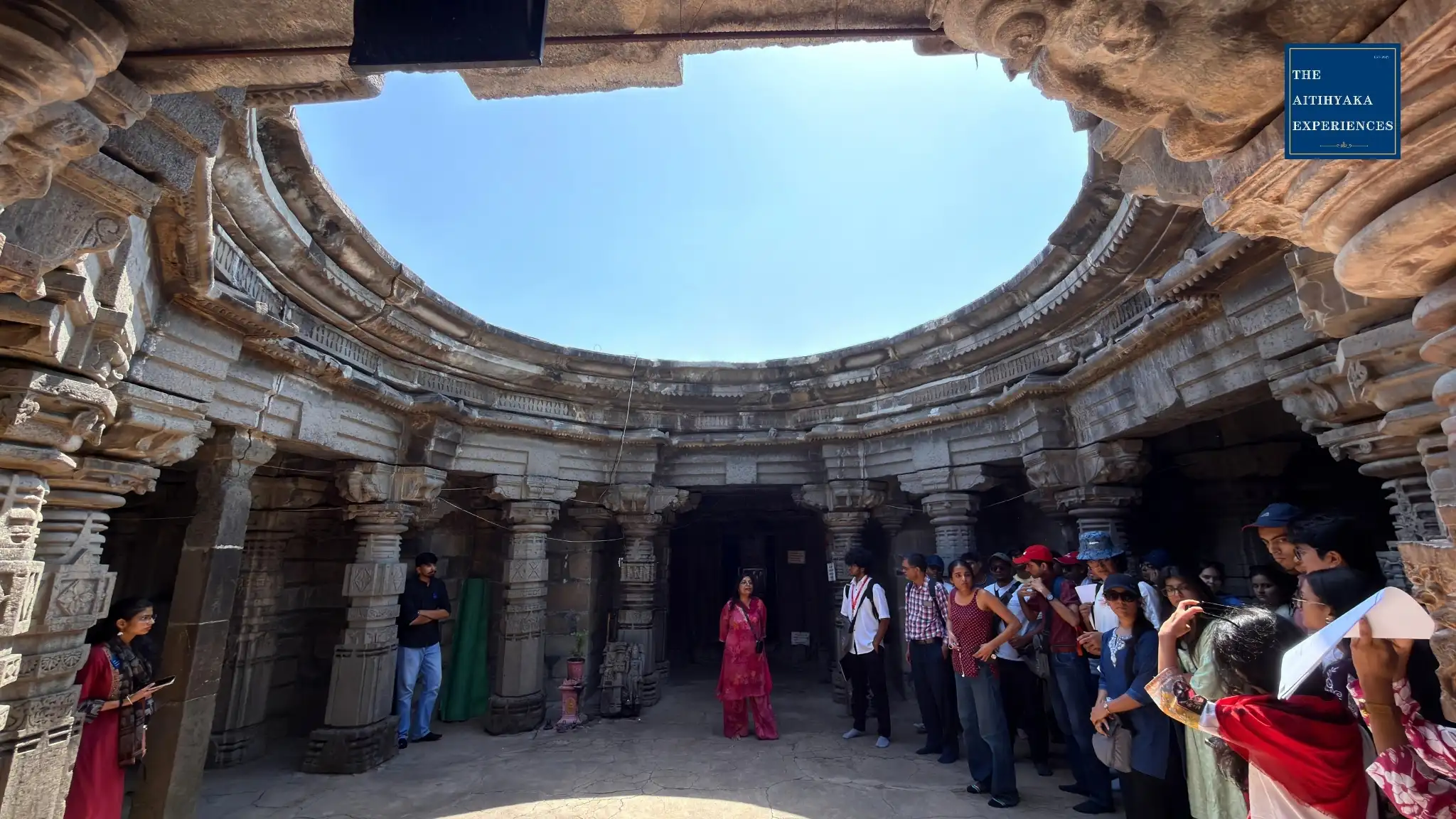
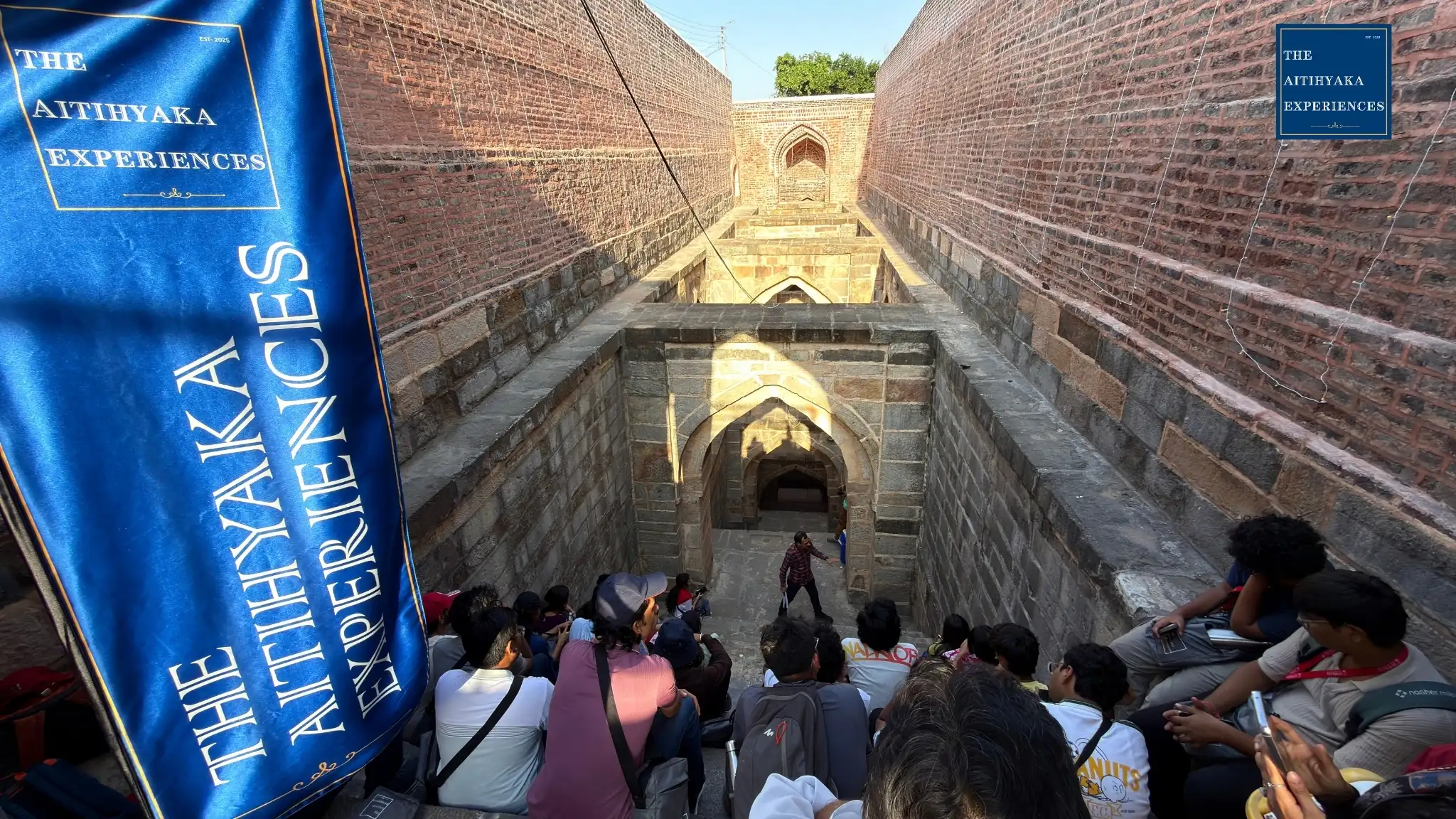
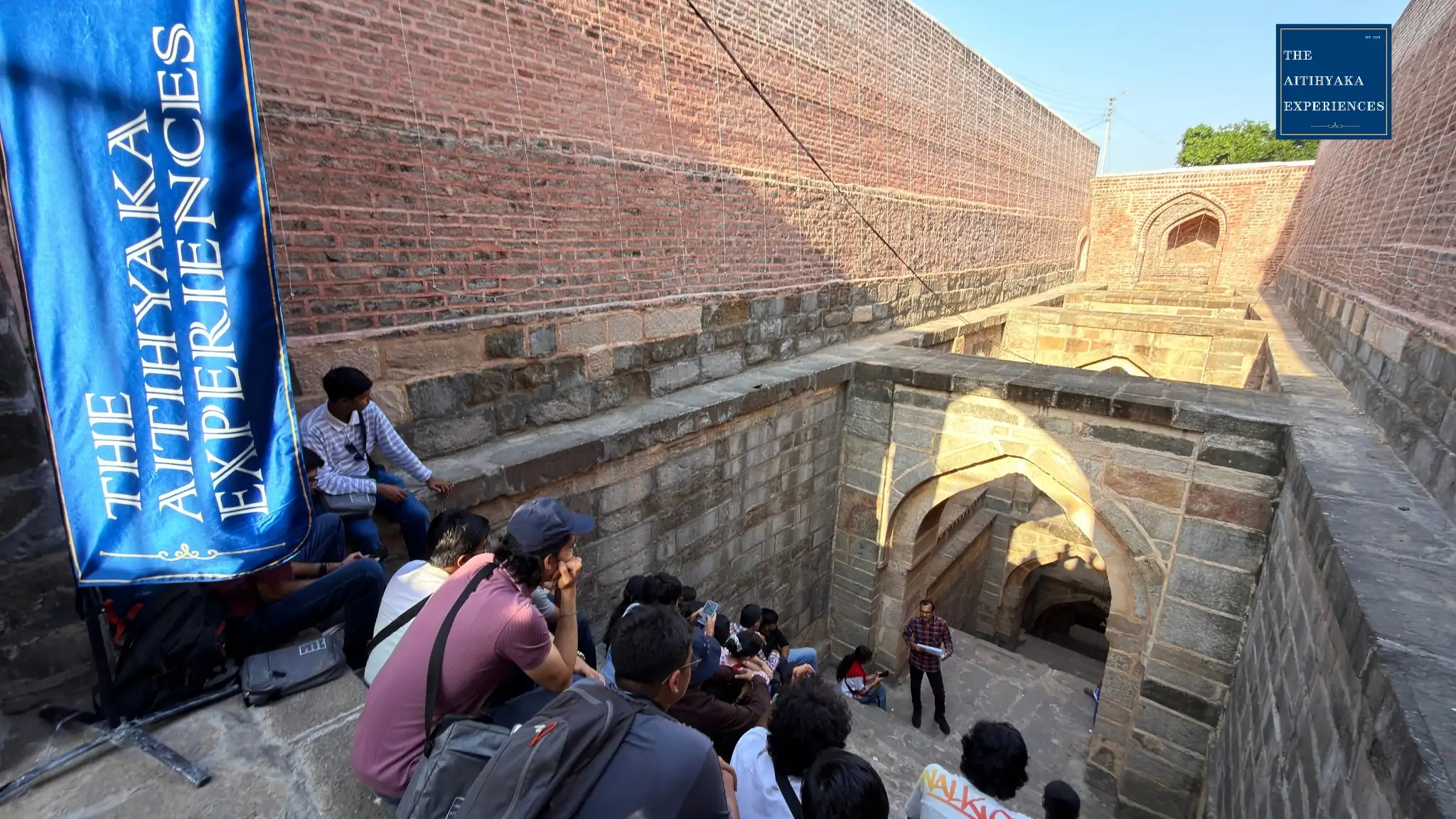
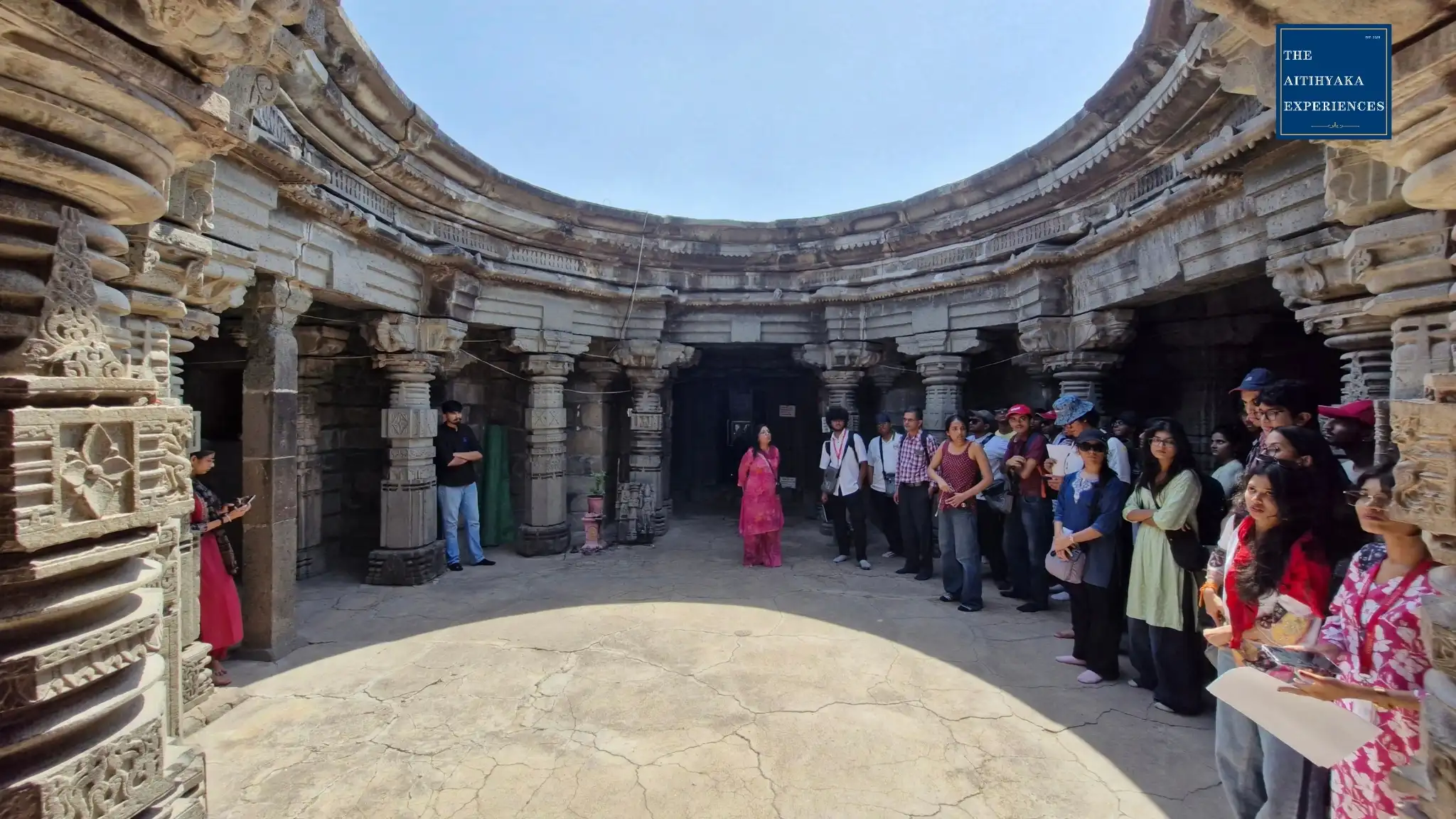
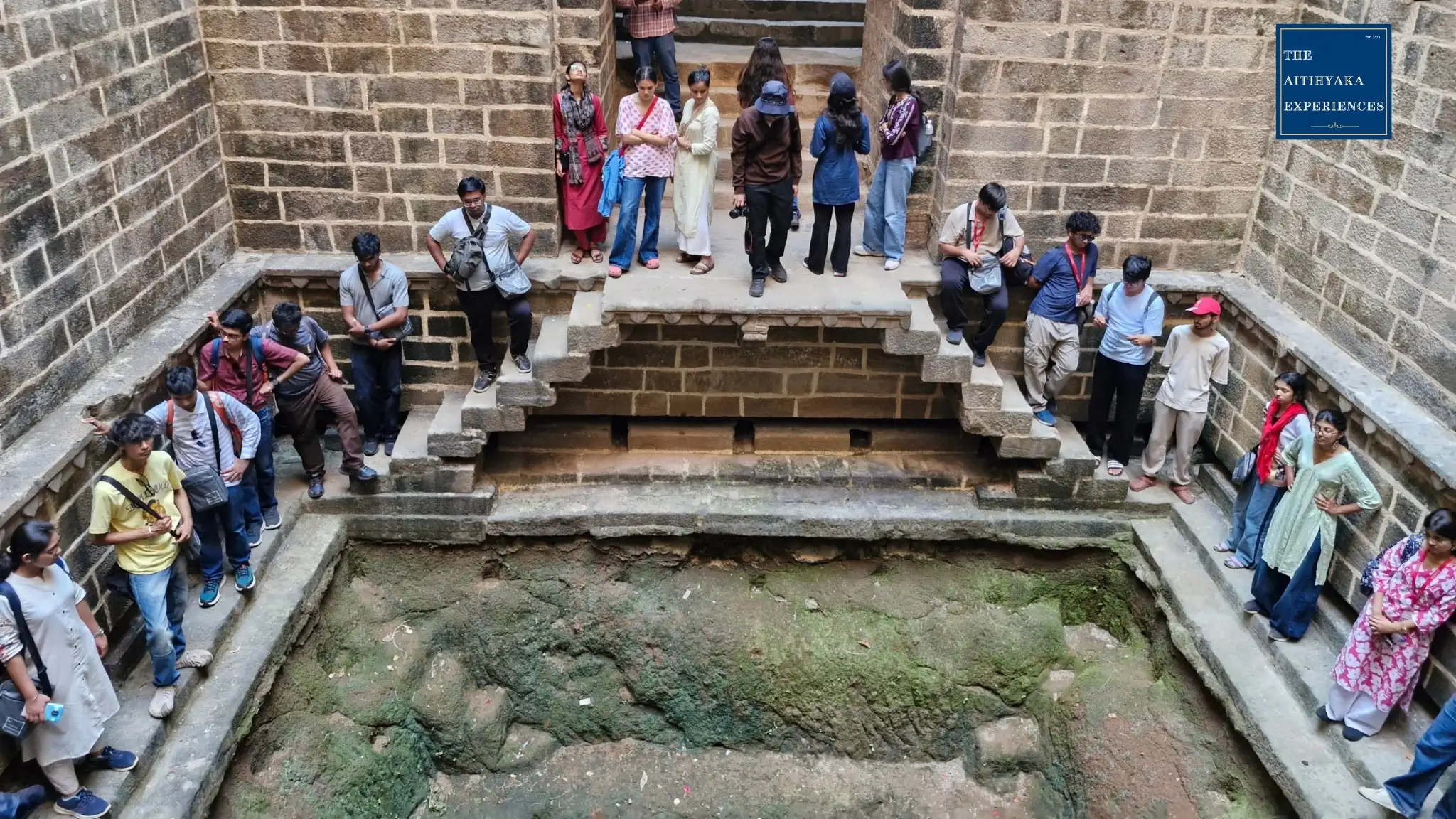
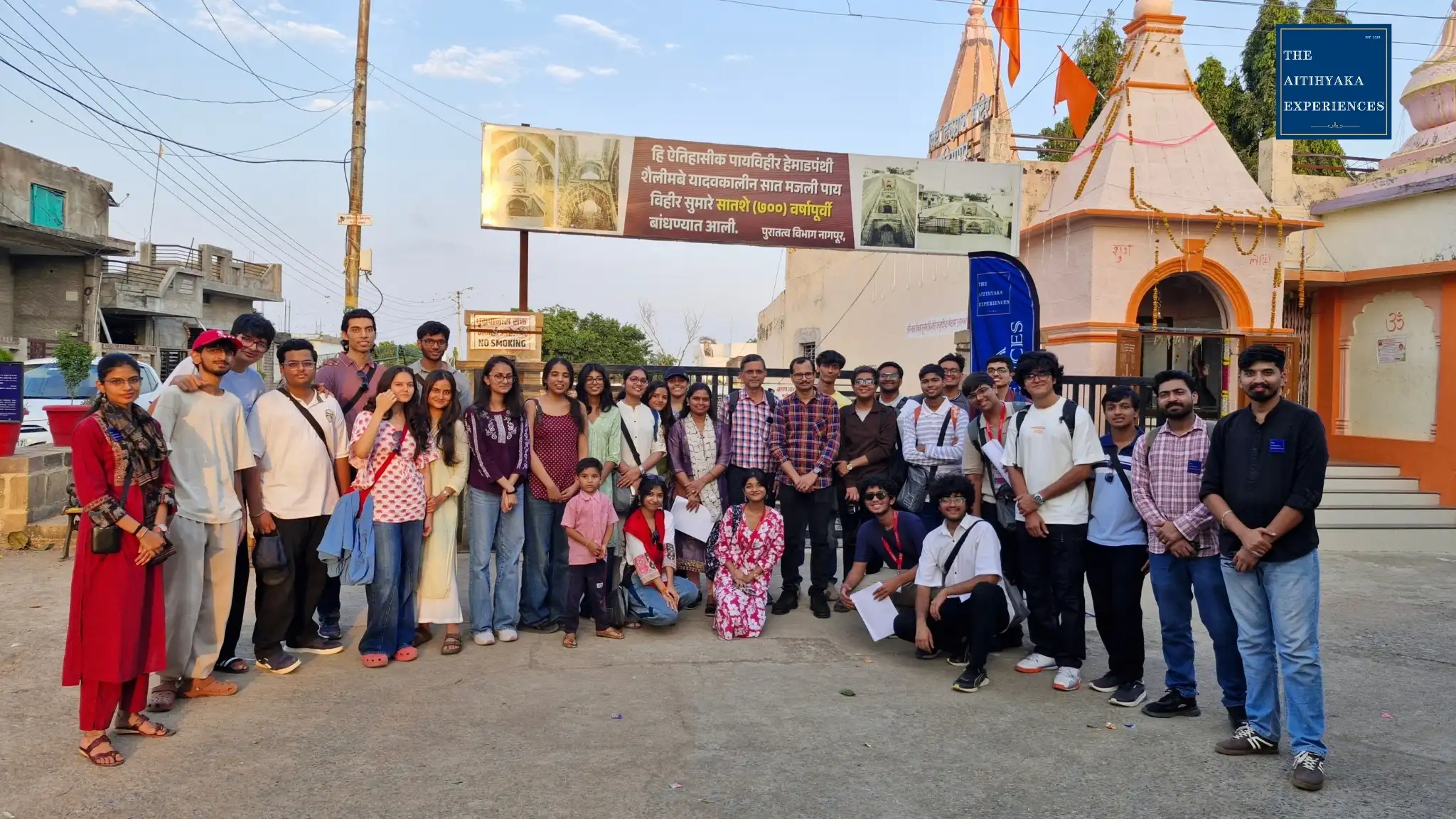
Visits to Mahimapur Stepwell and Anandeshwar Mandir at Lasur introduced students to traditional water infrastructure, historic architecture and the relationship between cultural sites and their natural surroundings.
At Mahimapur, students observed architectural features and explored traditional approaches to water access and management. At Anandeshwar Mandir, situated on the banks of the Purna River, they examined the temple's architectural character and cultural significance.
Together, the visits highlighted how heritage reflects the ways communities have engaged with landscapes, resources and cultural practices over time.
Rock Art, Natural Pigmentation and Cultural Landscapes
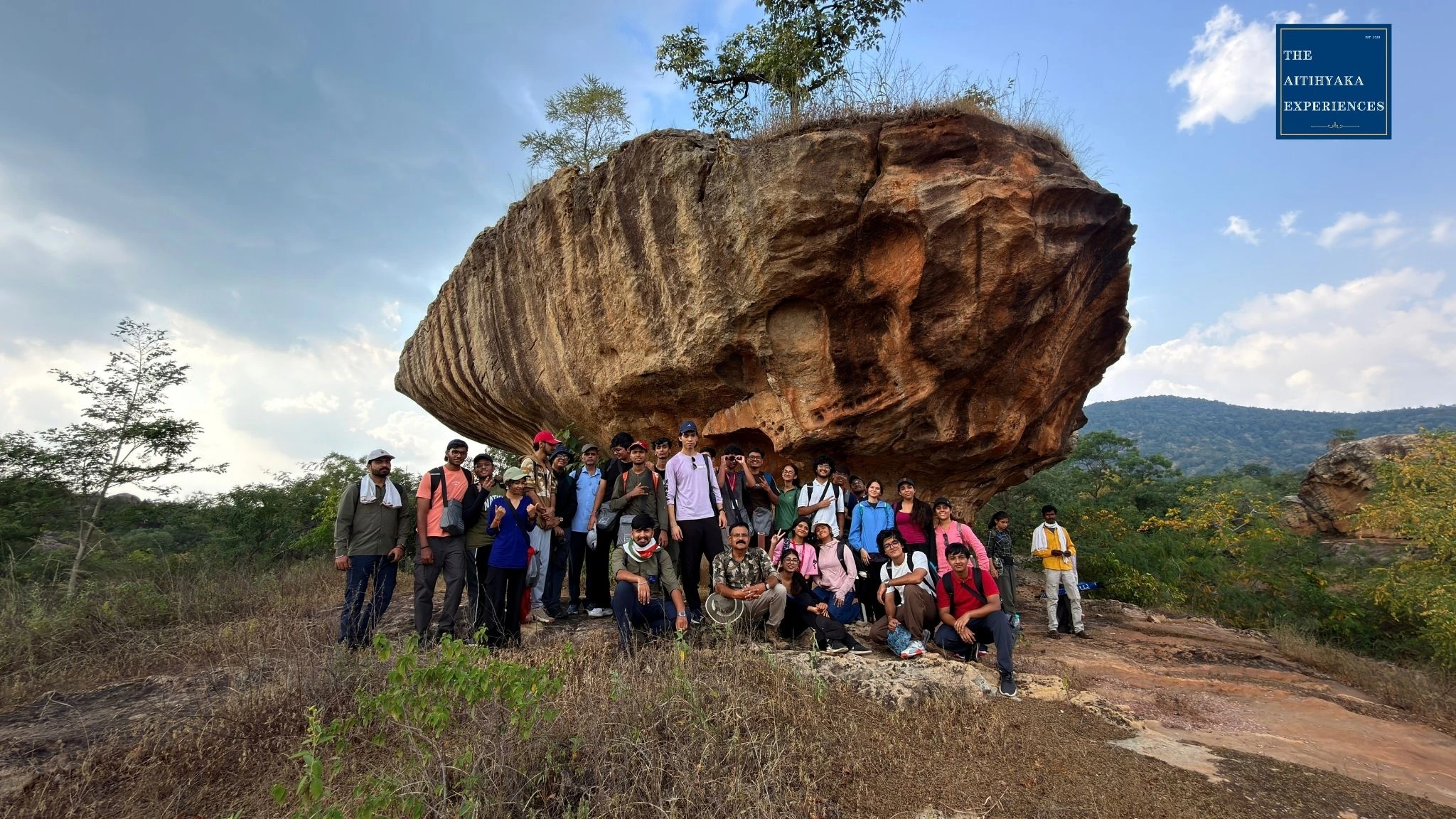
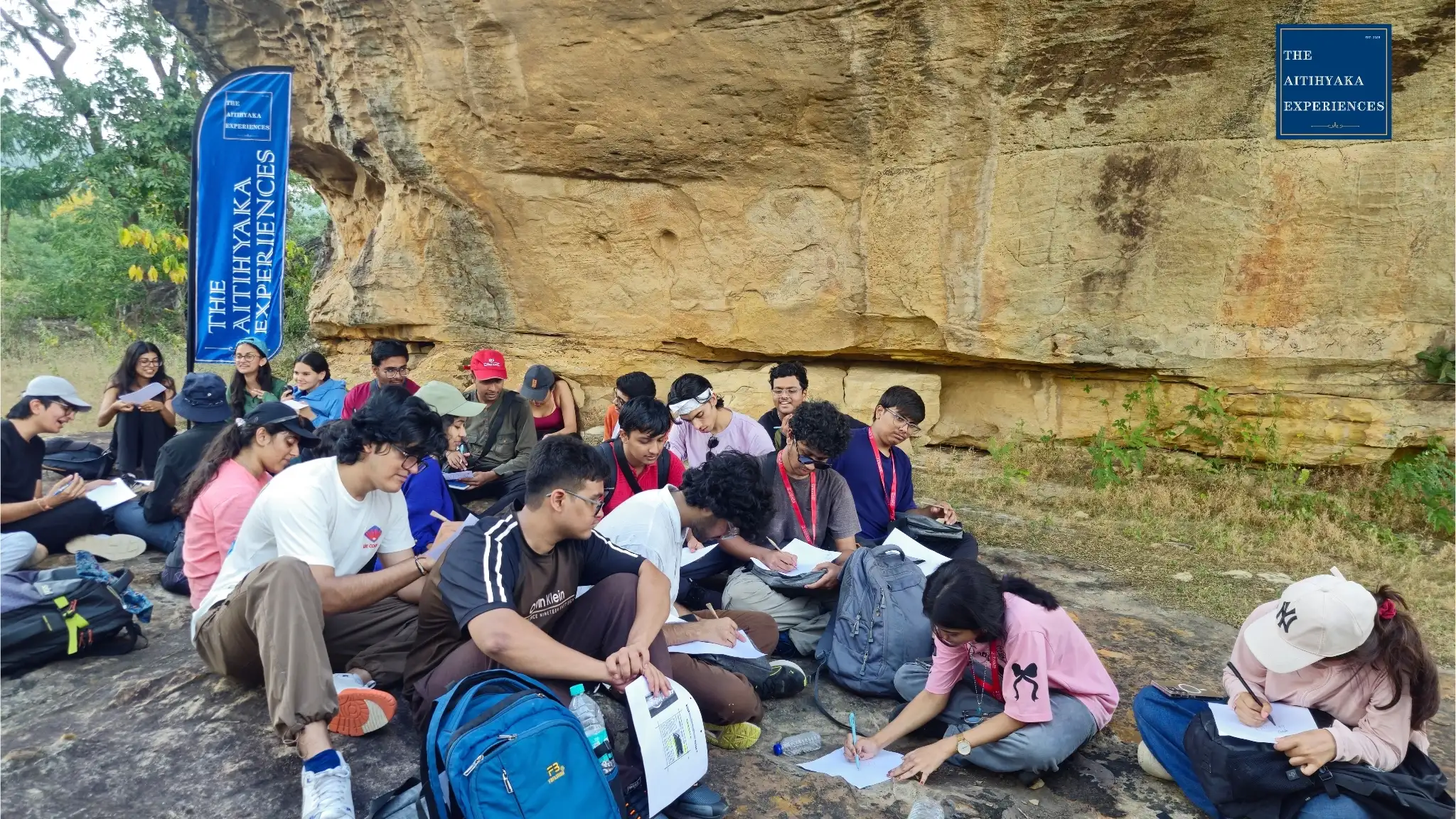
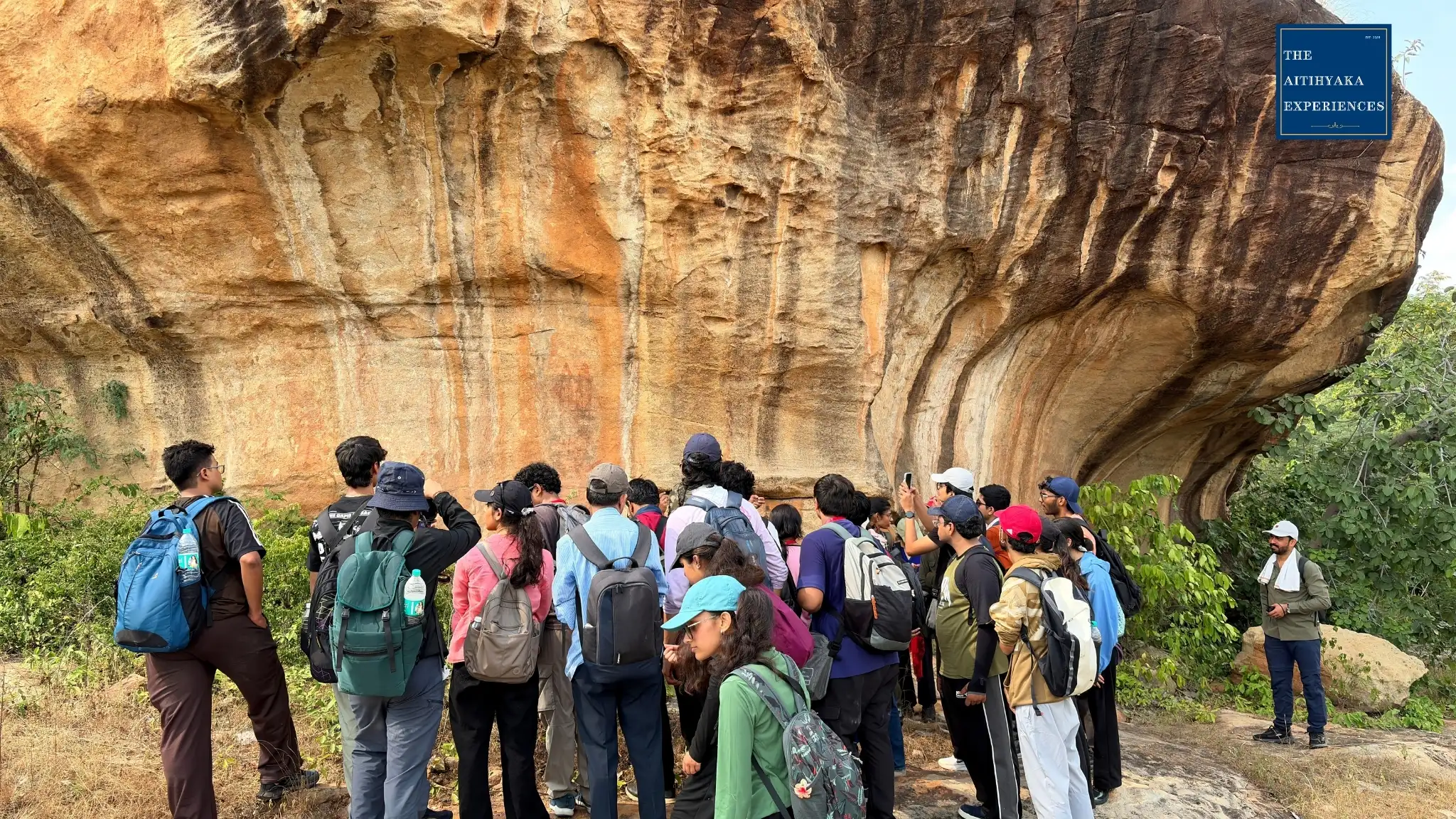
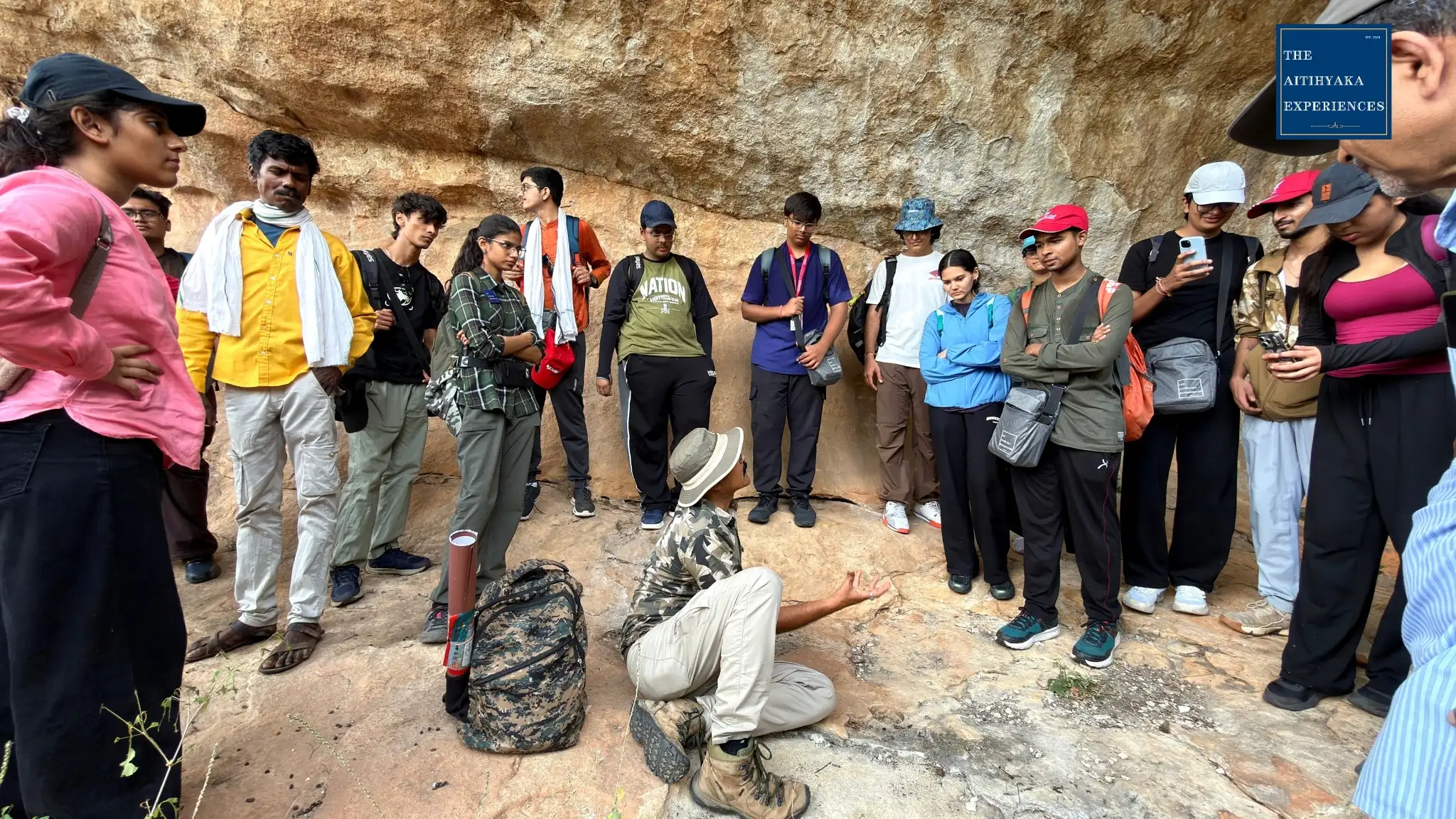
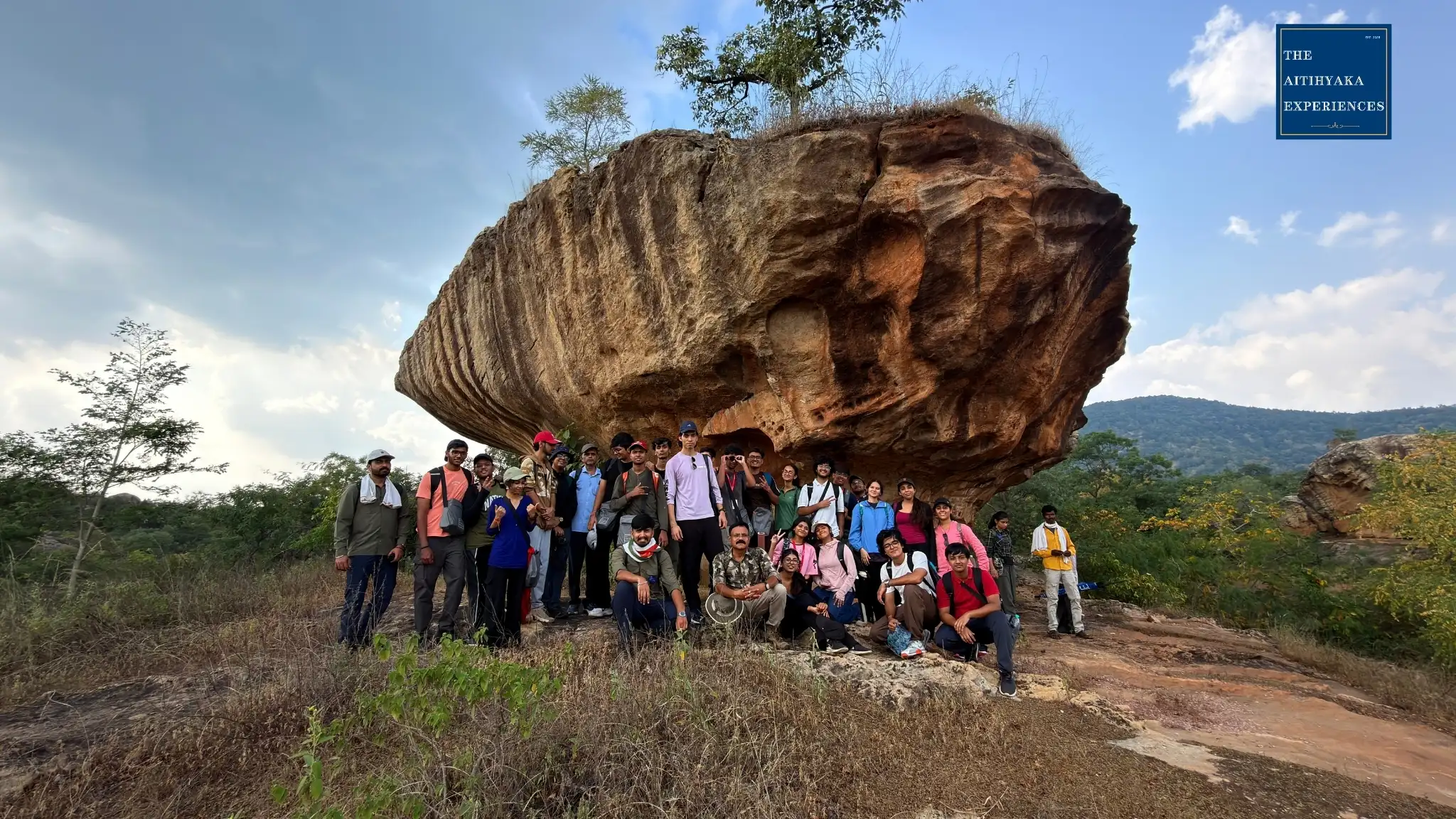
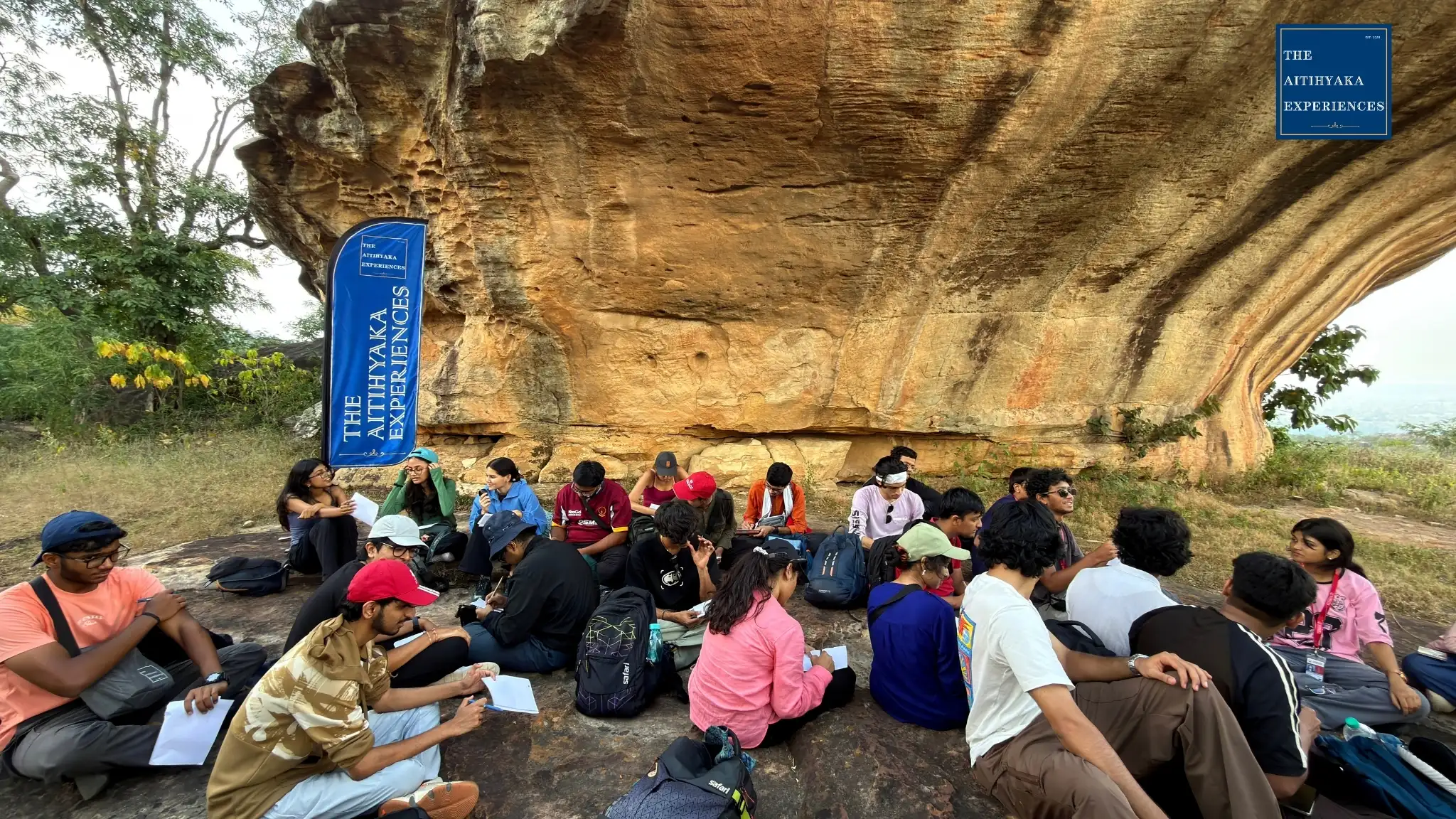
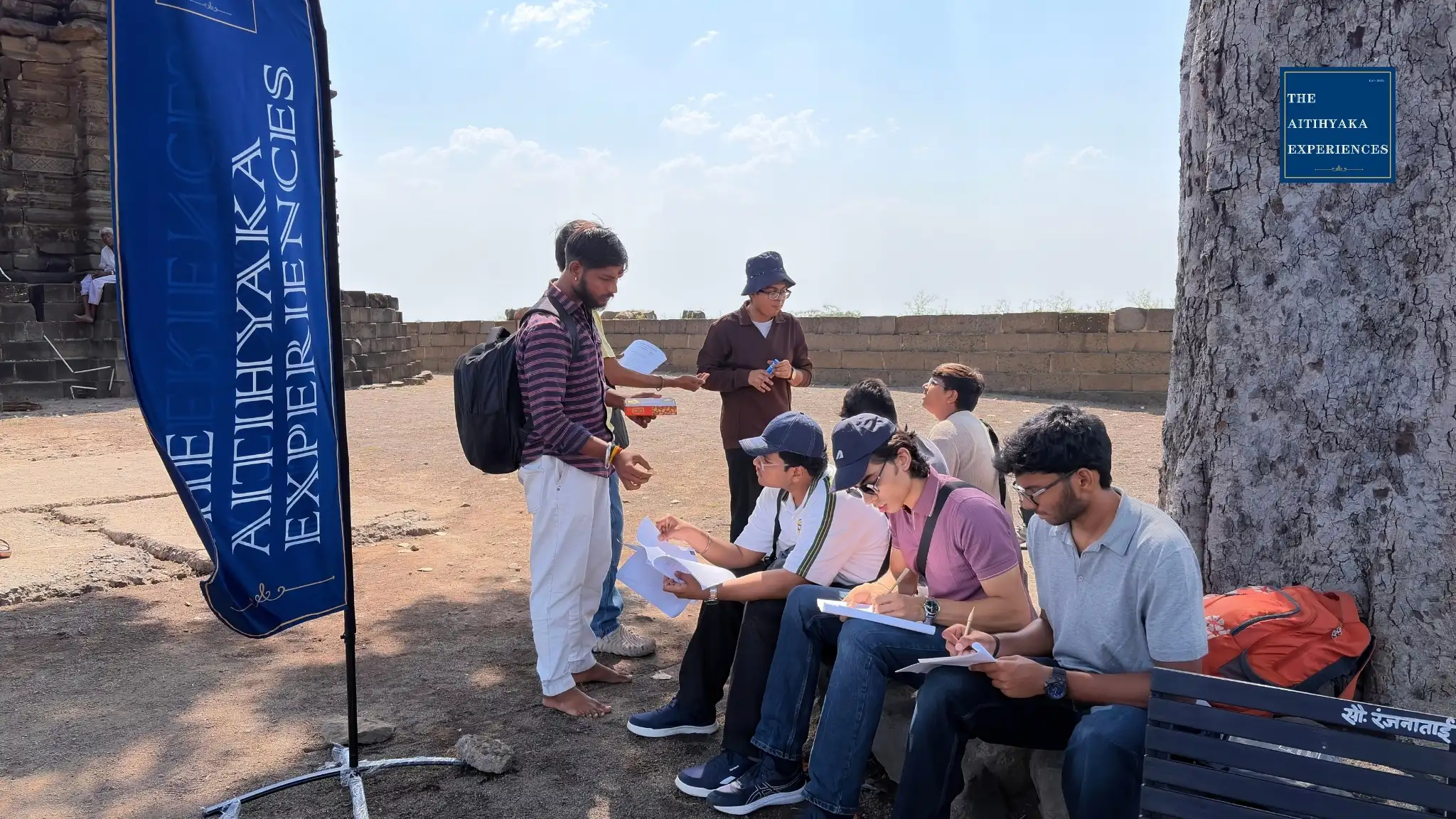
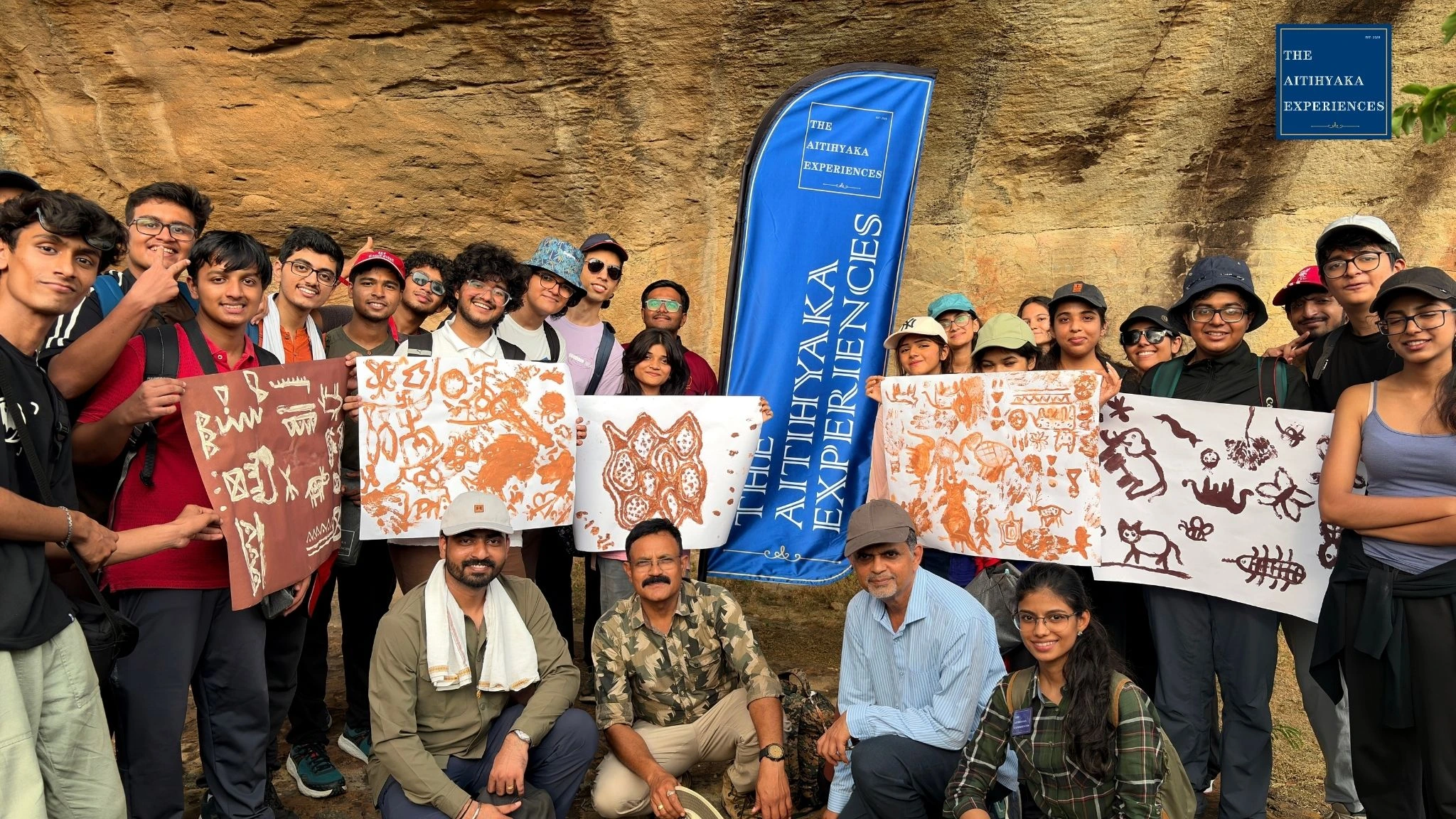
At Salbardi, students explored rock paintings and rock shelters within a landscape of geological formations and natural features.
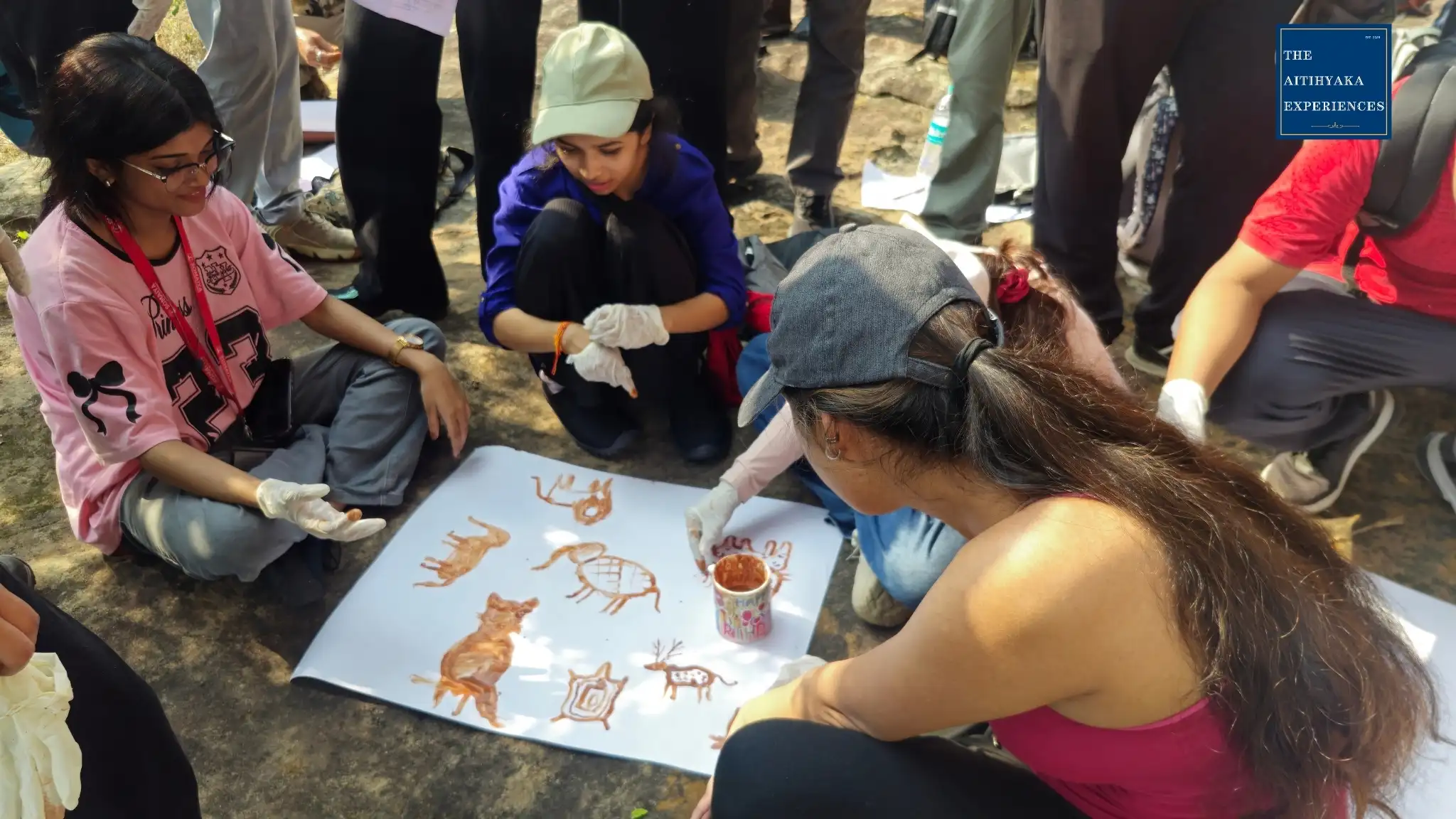
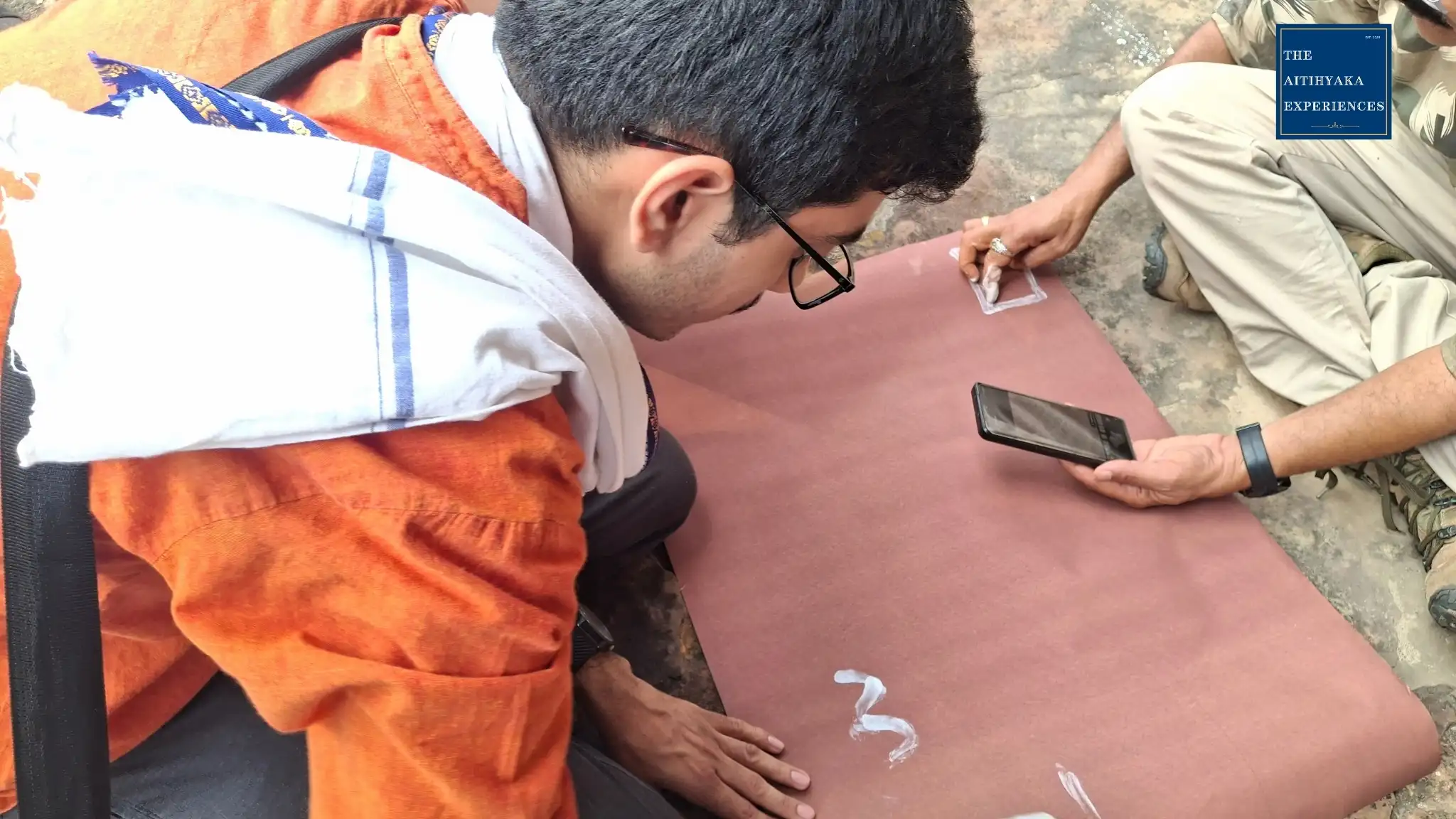
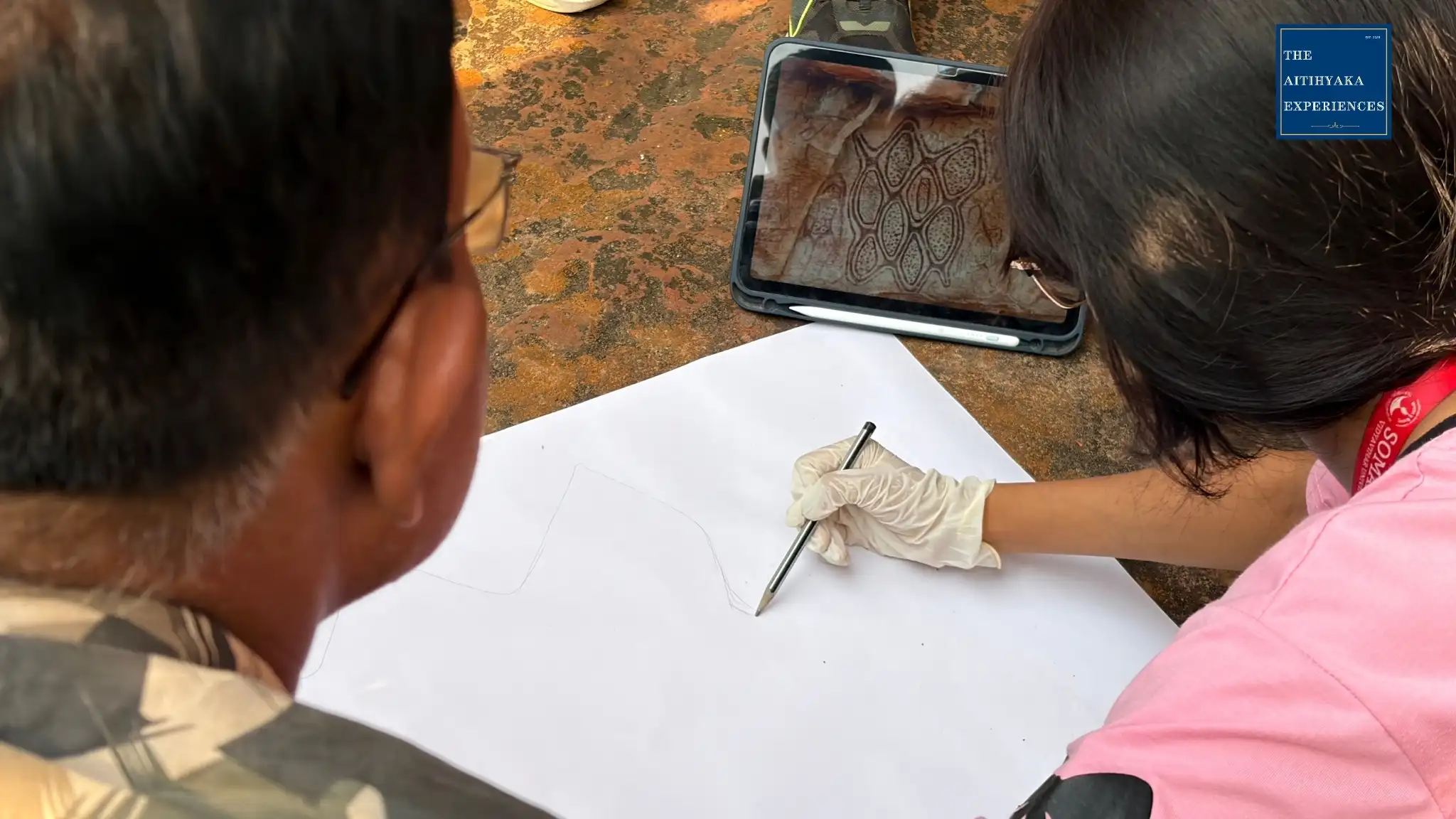
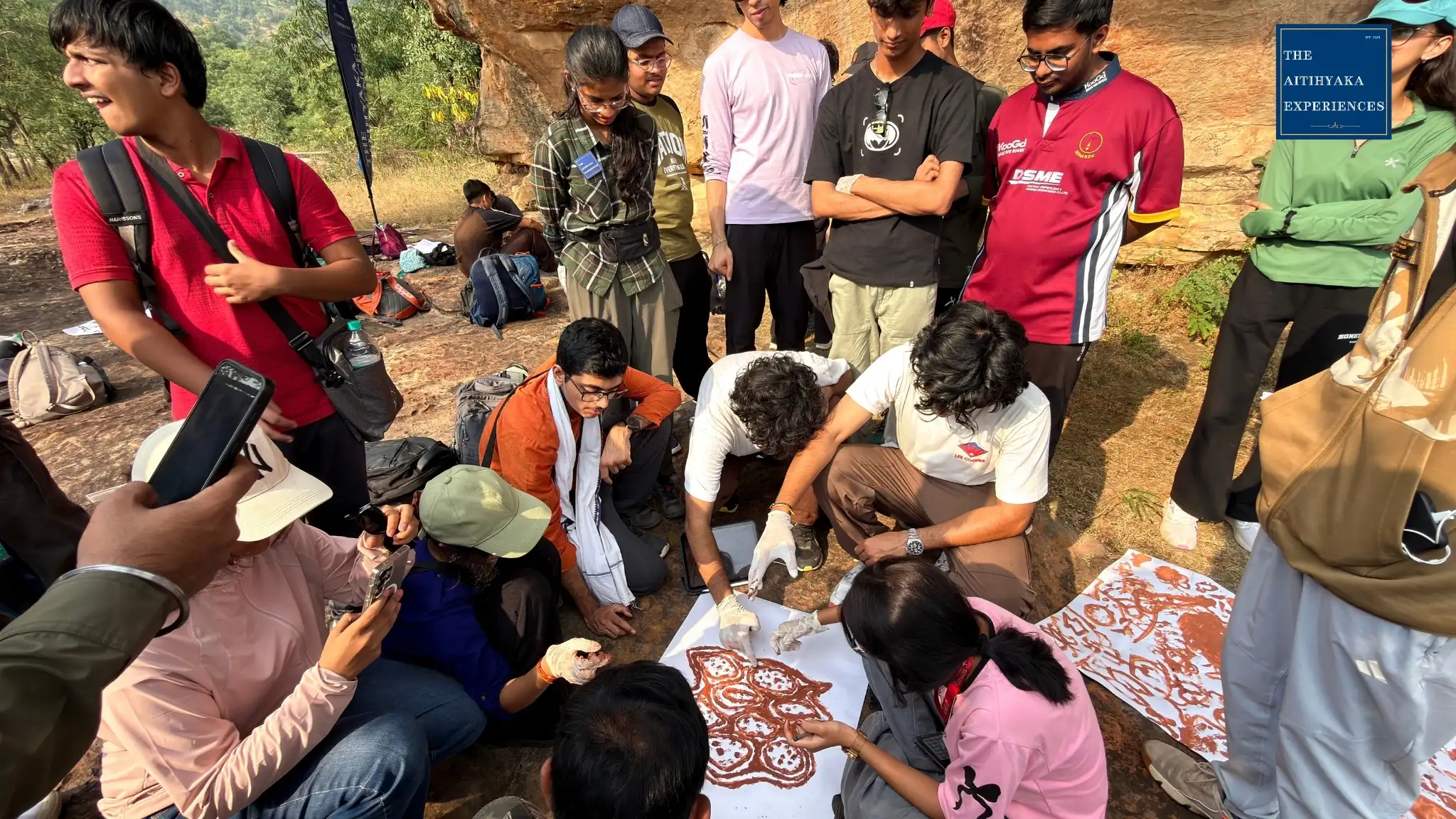
A hands-on natural pigmentation and motif recreation activity introduced students to natural pigments and visual forms associated with rock art. The experience connected creative engagement with site observation, documentation and the importance of conserving archaeological remains and their surrounding landscapes.
Forest Ecology, Wildlife Tracking and Human–Wildlife Coexistence
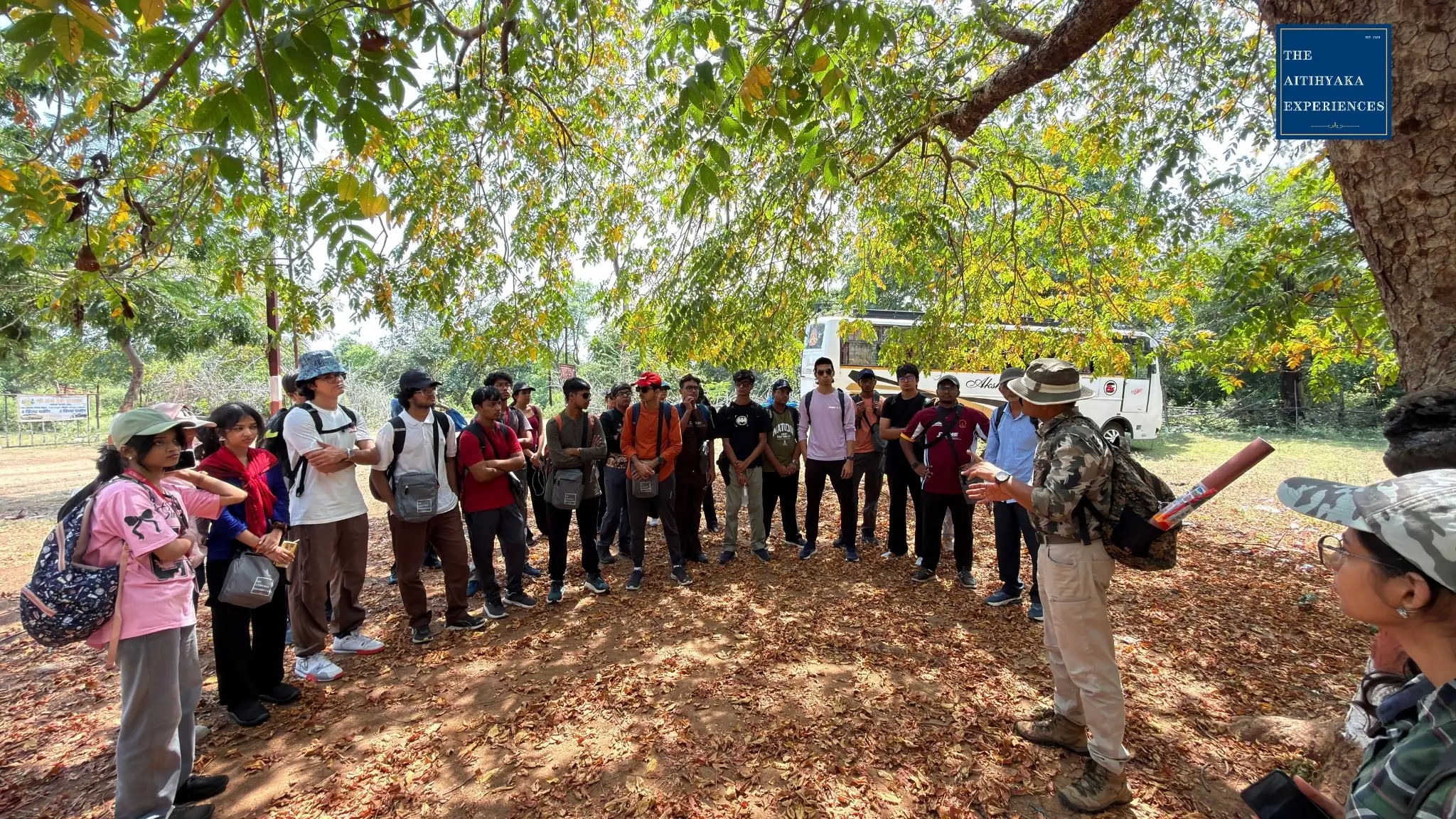
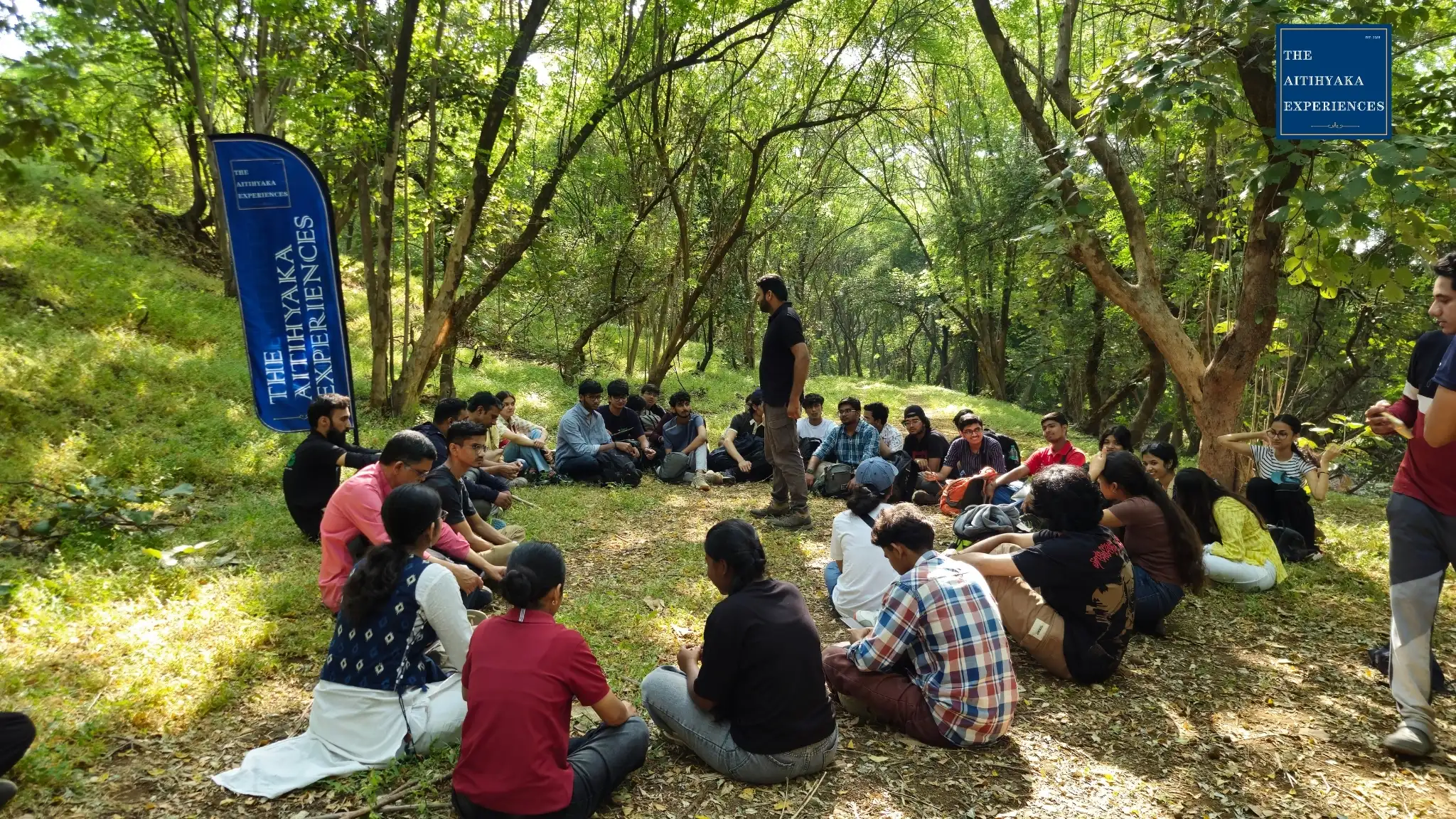
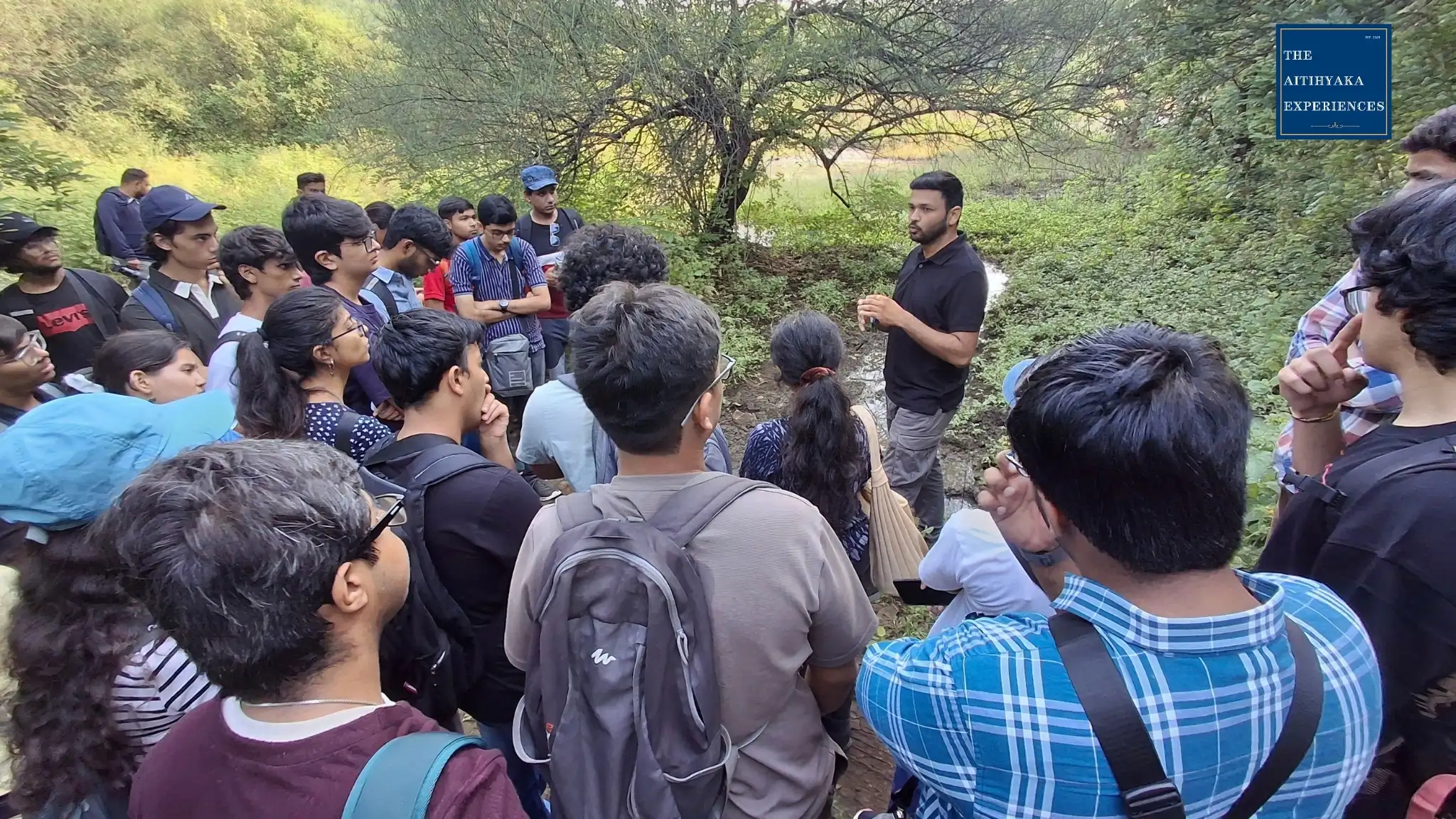
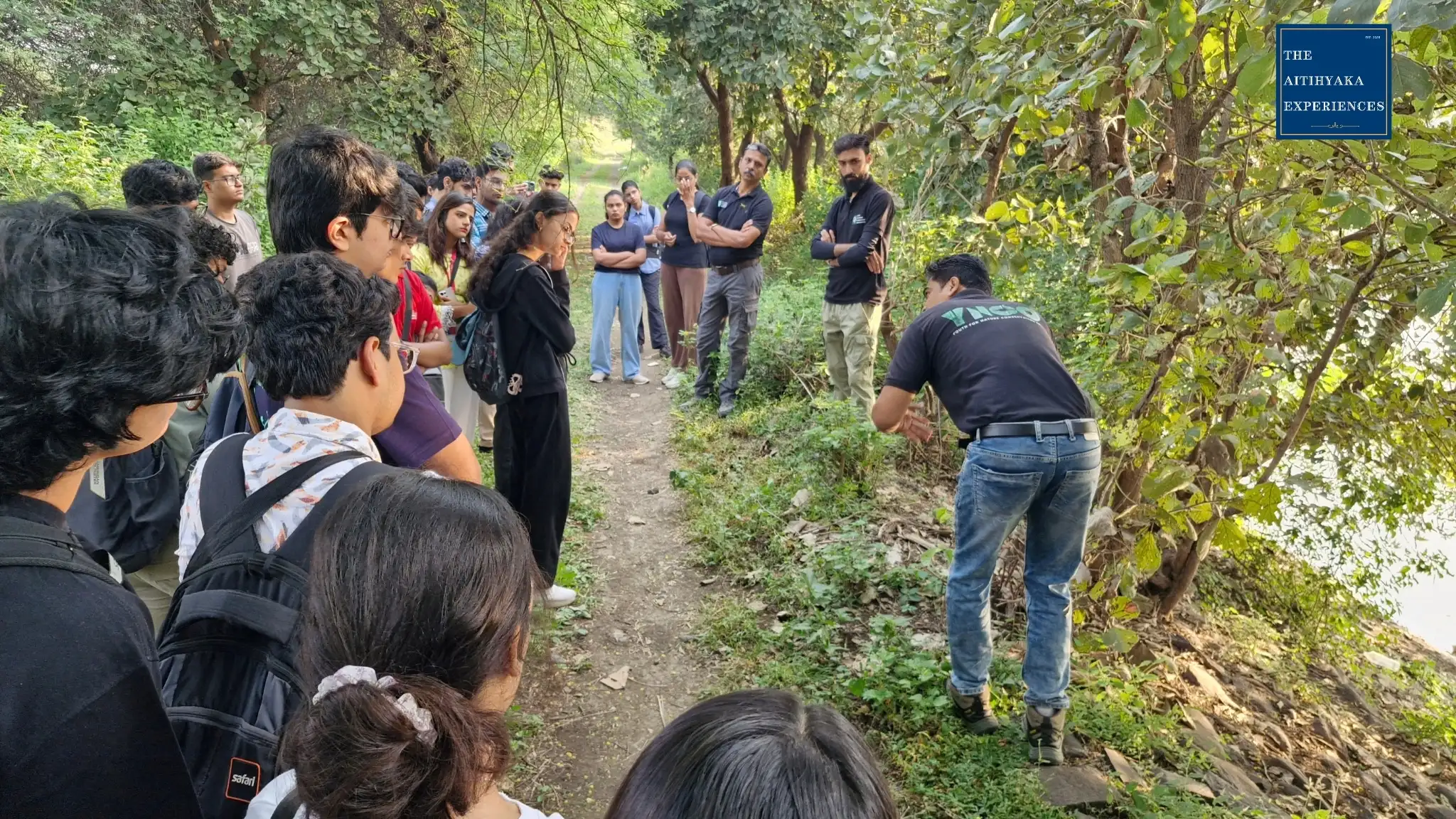
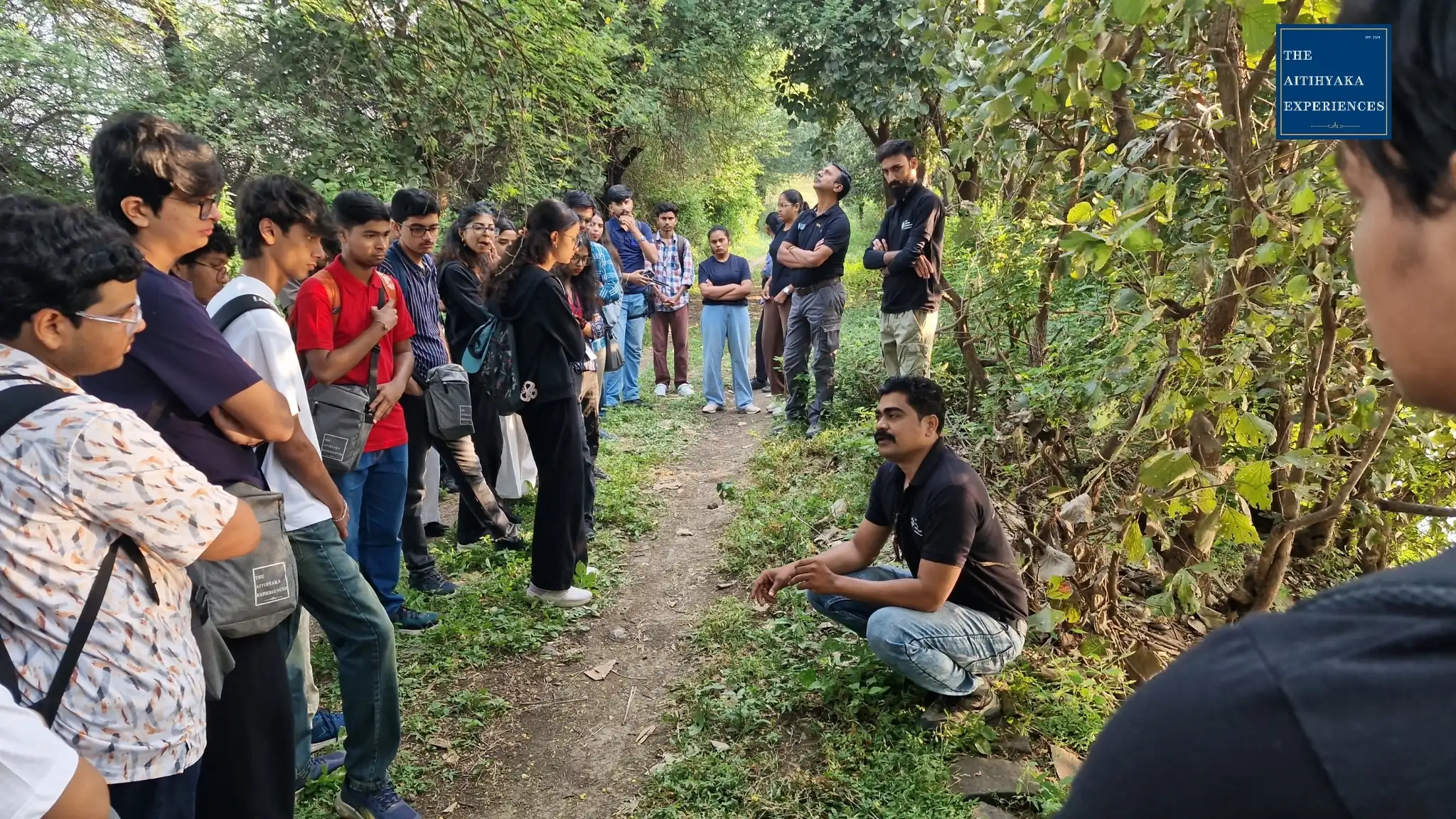
The third day focused on forest ecology, biodiversity and human–wildlife relationships.
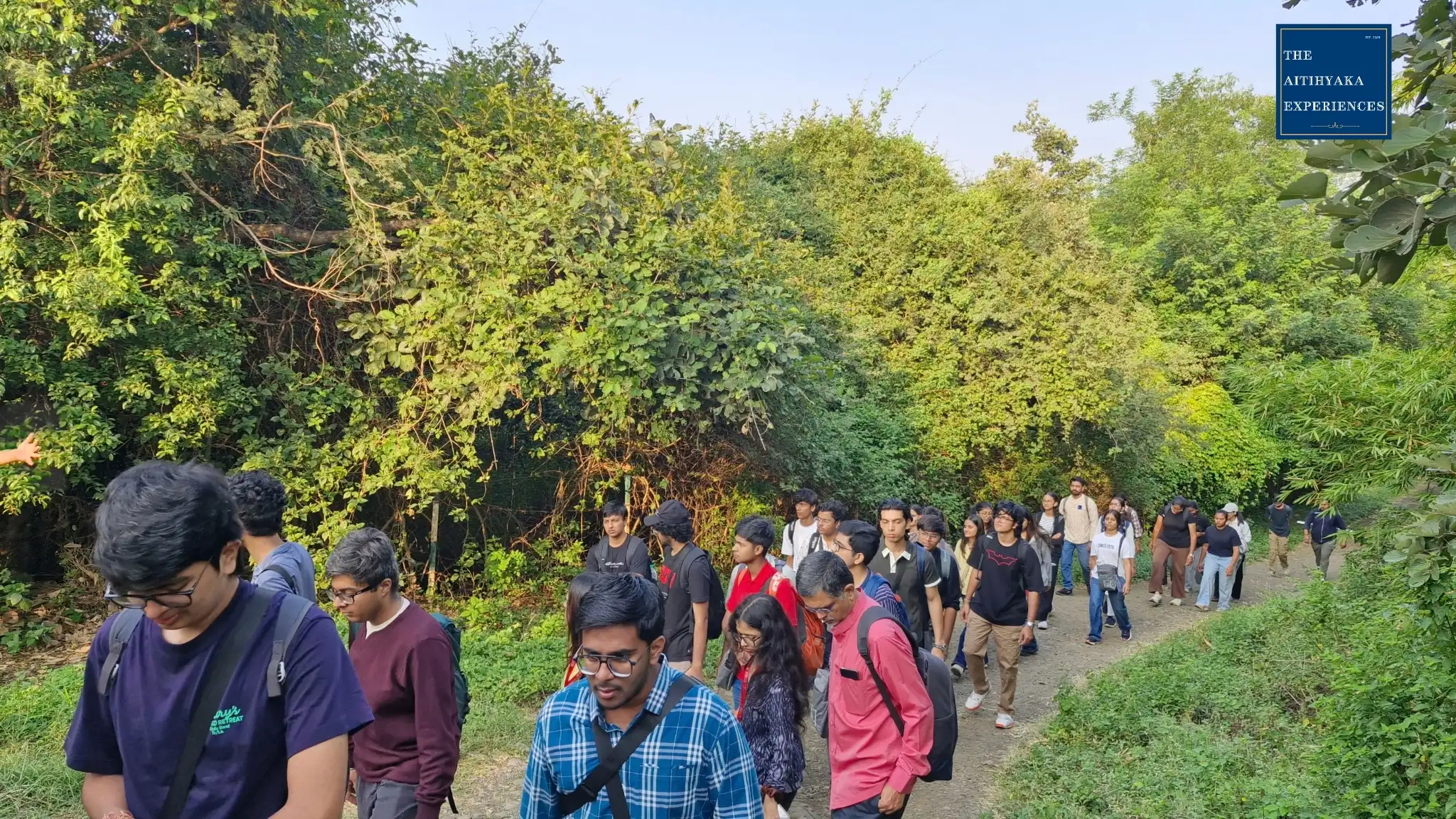
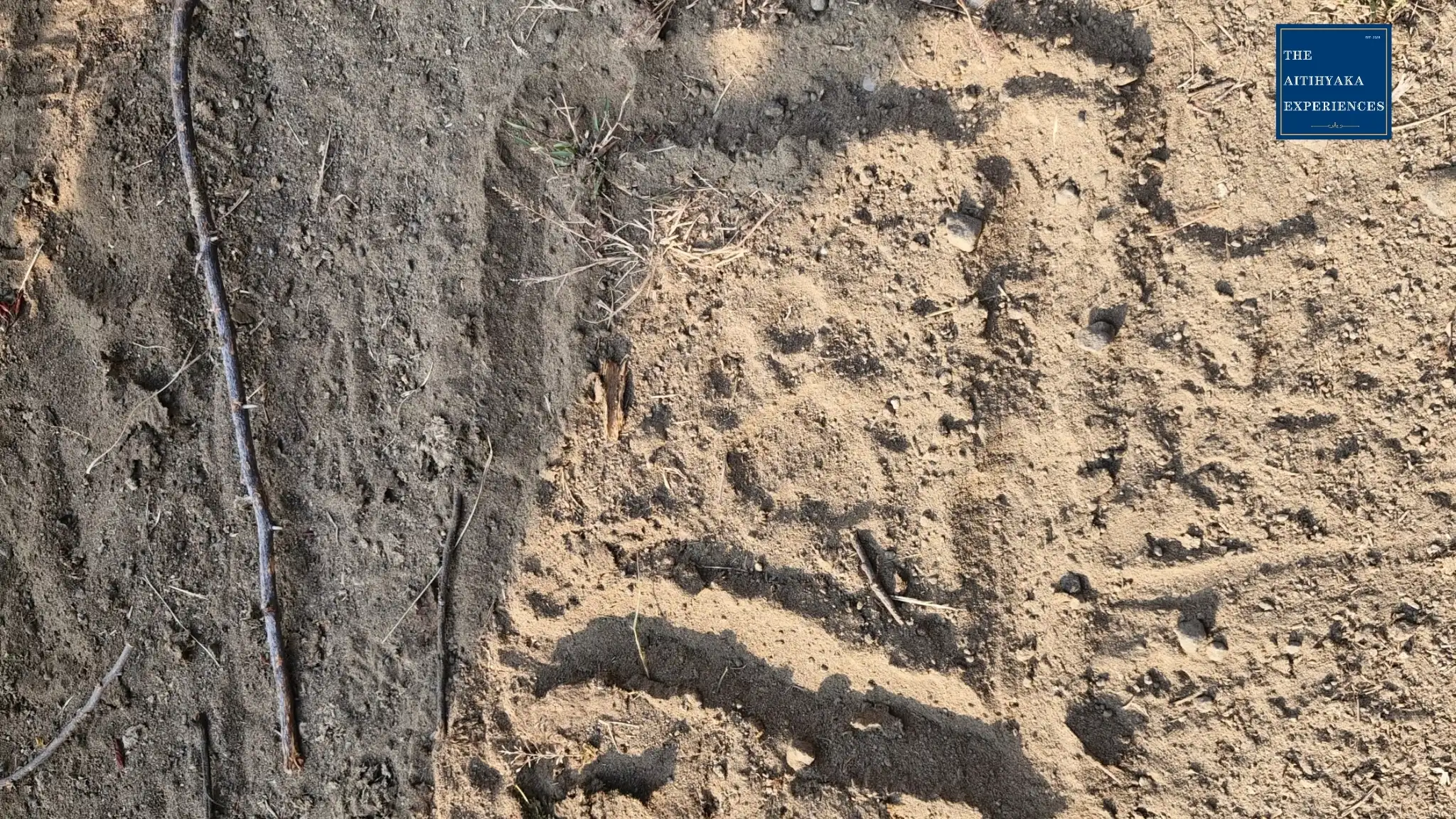
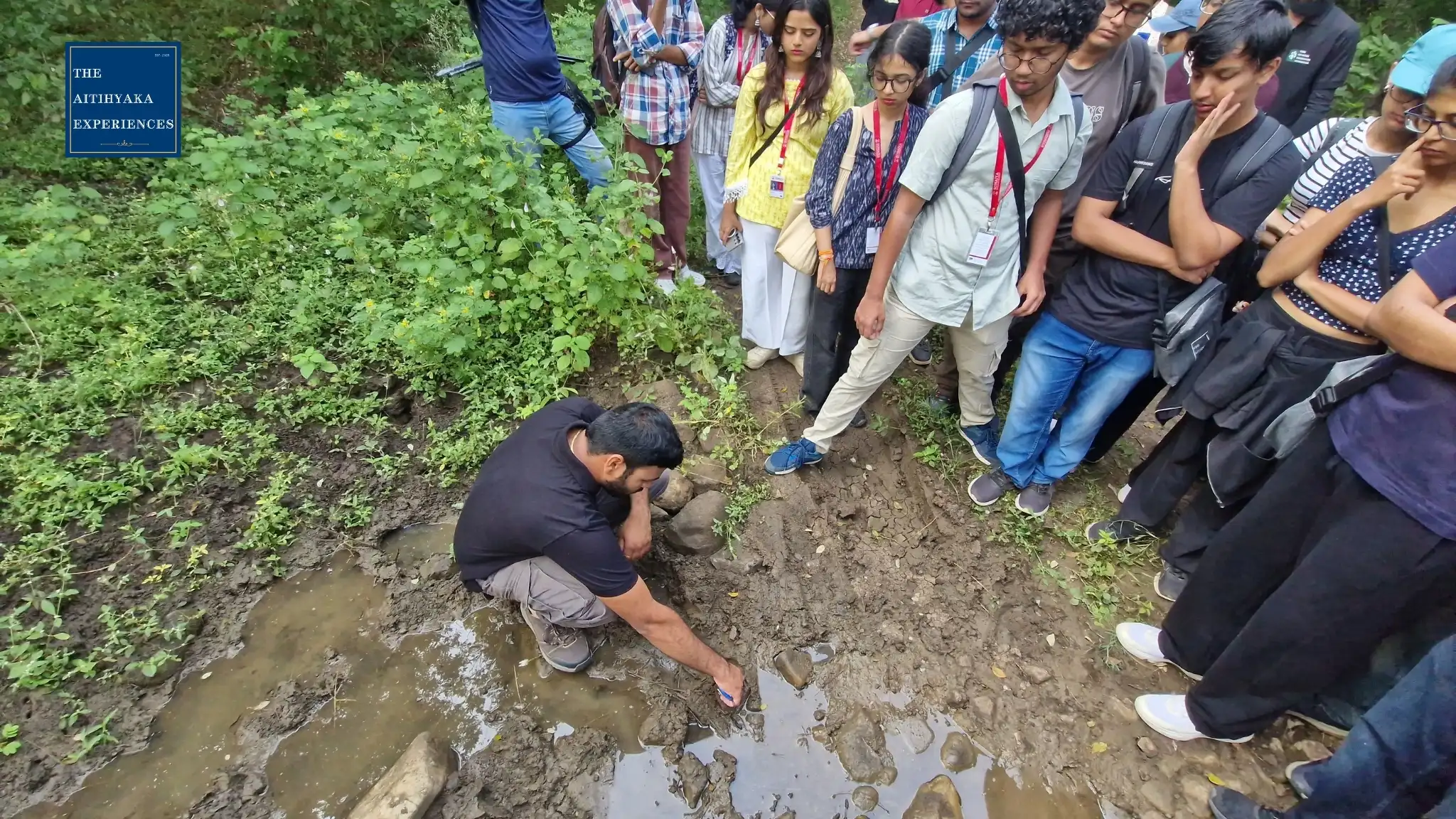
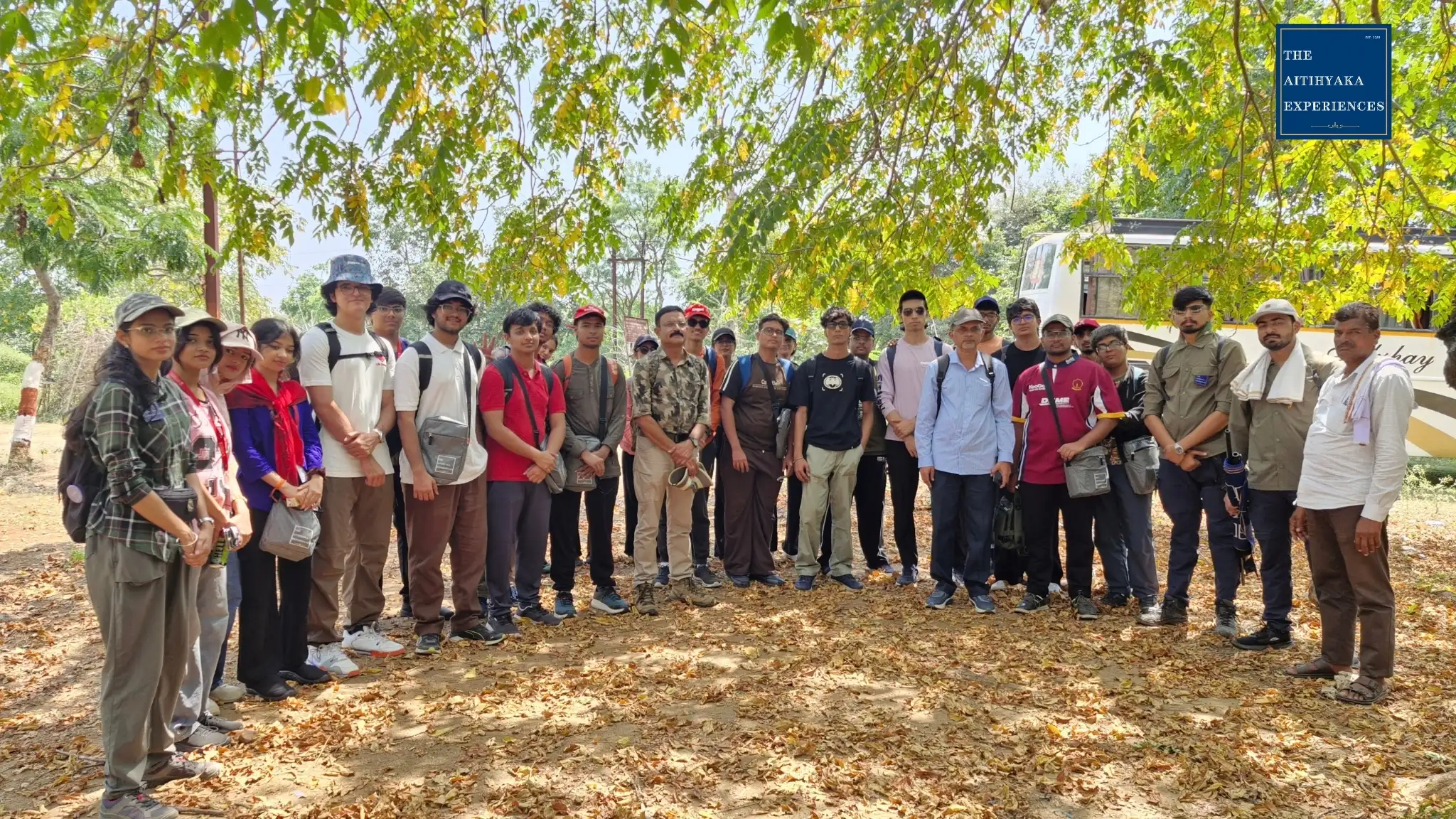
During a guided nature trail, students observed the forest environment and identified signs of wildlife, including leopard pugmarks, scat, spray markings, claw marks and scraping marks. They were also introduced to camera trapping and its role in documenting wildlife activity and understanding animal movement.
The trail offered opportunities to observe lesser-known plant species and appreciate forest biodiversity. Students came close to a potential encounter with a leopard and its cub but missed seeing the animals, highlighting the unpredictable nature of wildlife observation.
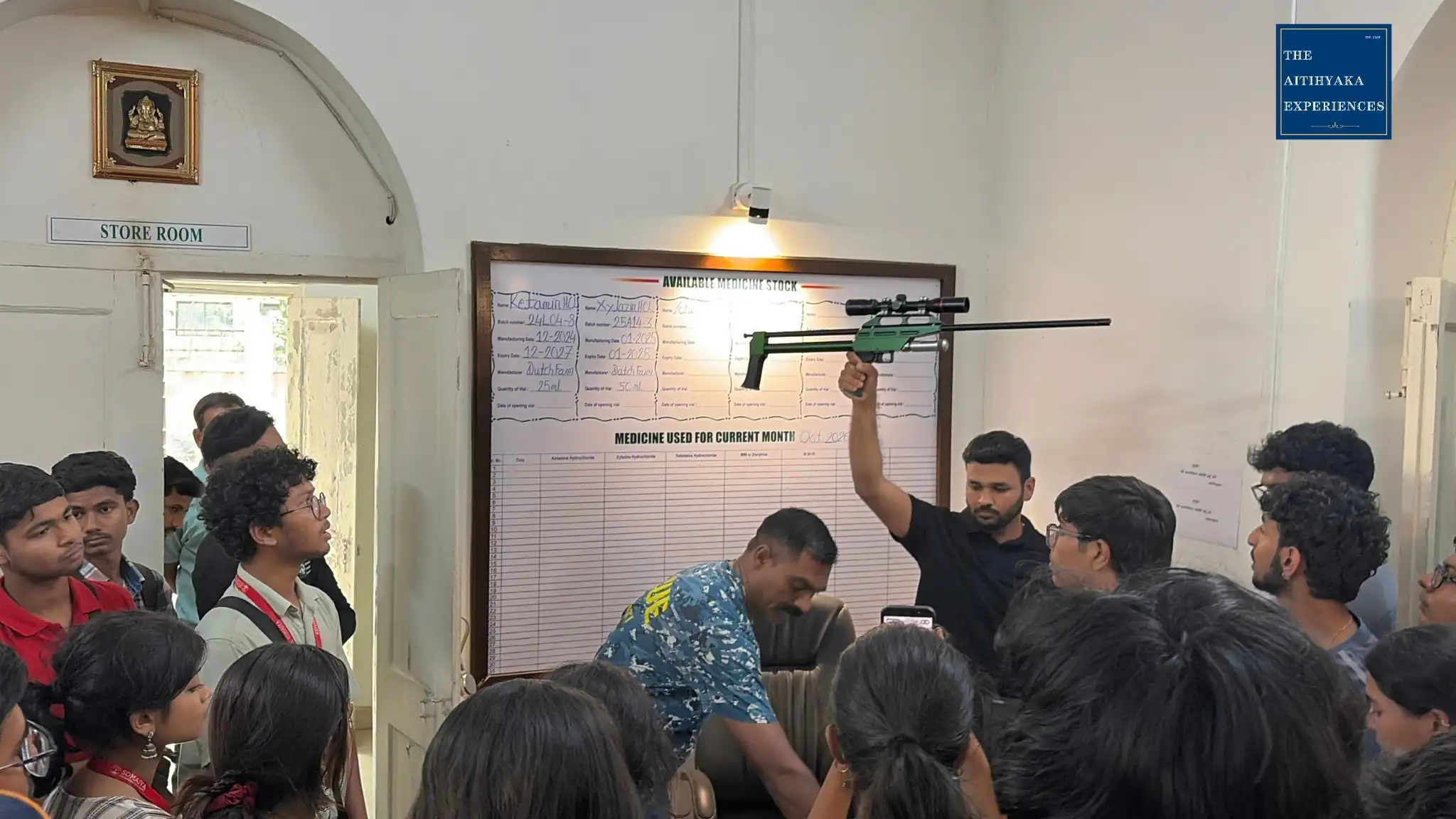
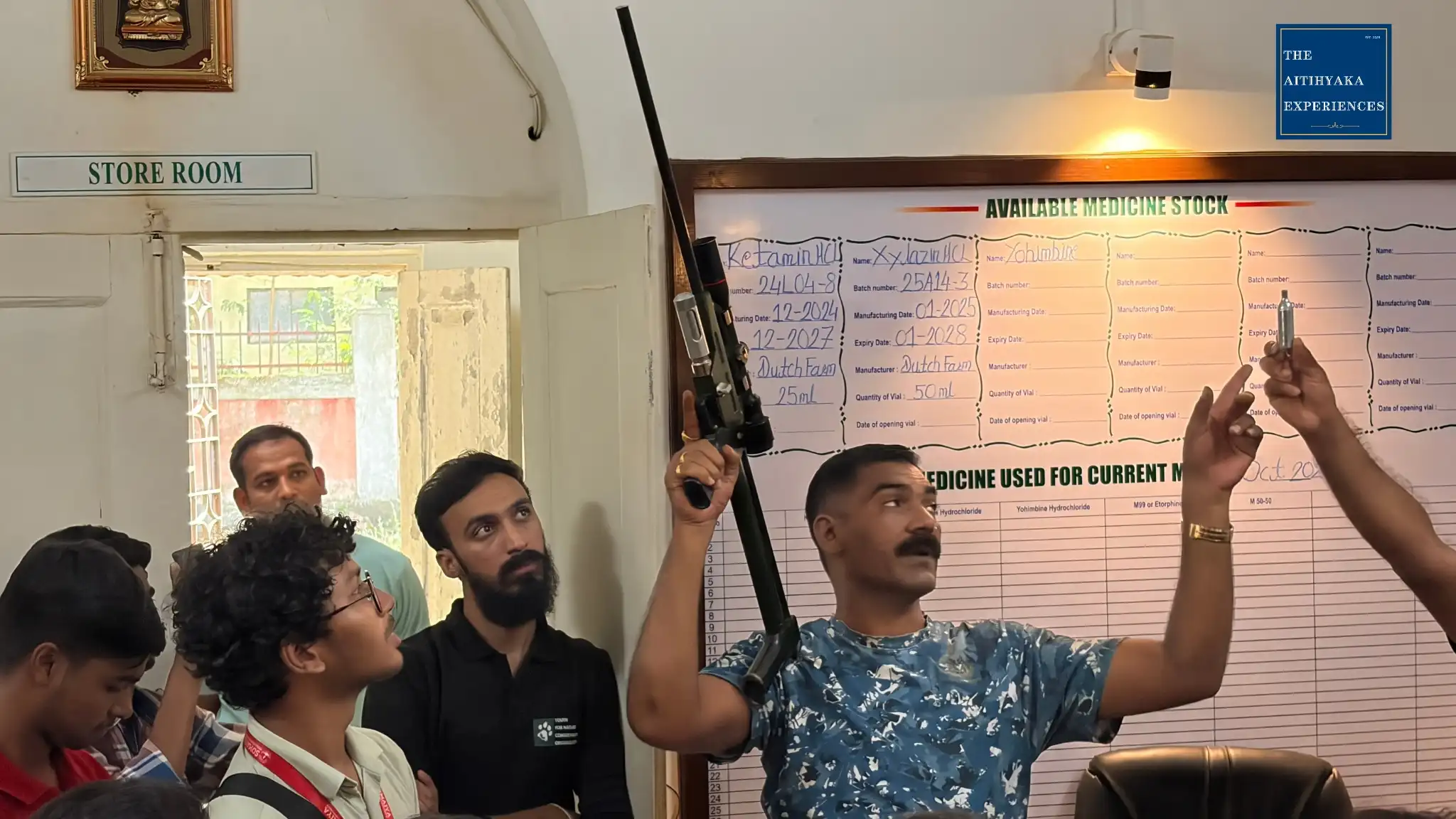
Visits to a human–leopard conflict site and a Forest Department wildlife rescue facility introduced students to the challenges of wildlife conservation, rescue operations and human–wildlife coexistence.
Agriculture, Orange Cultivation and Local Livelihoods
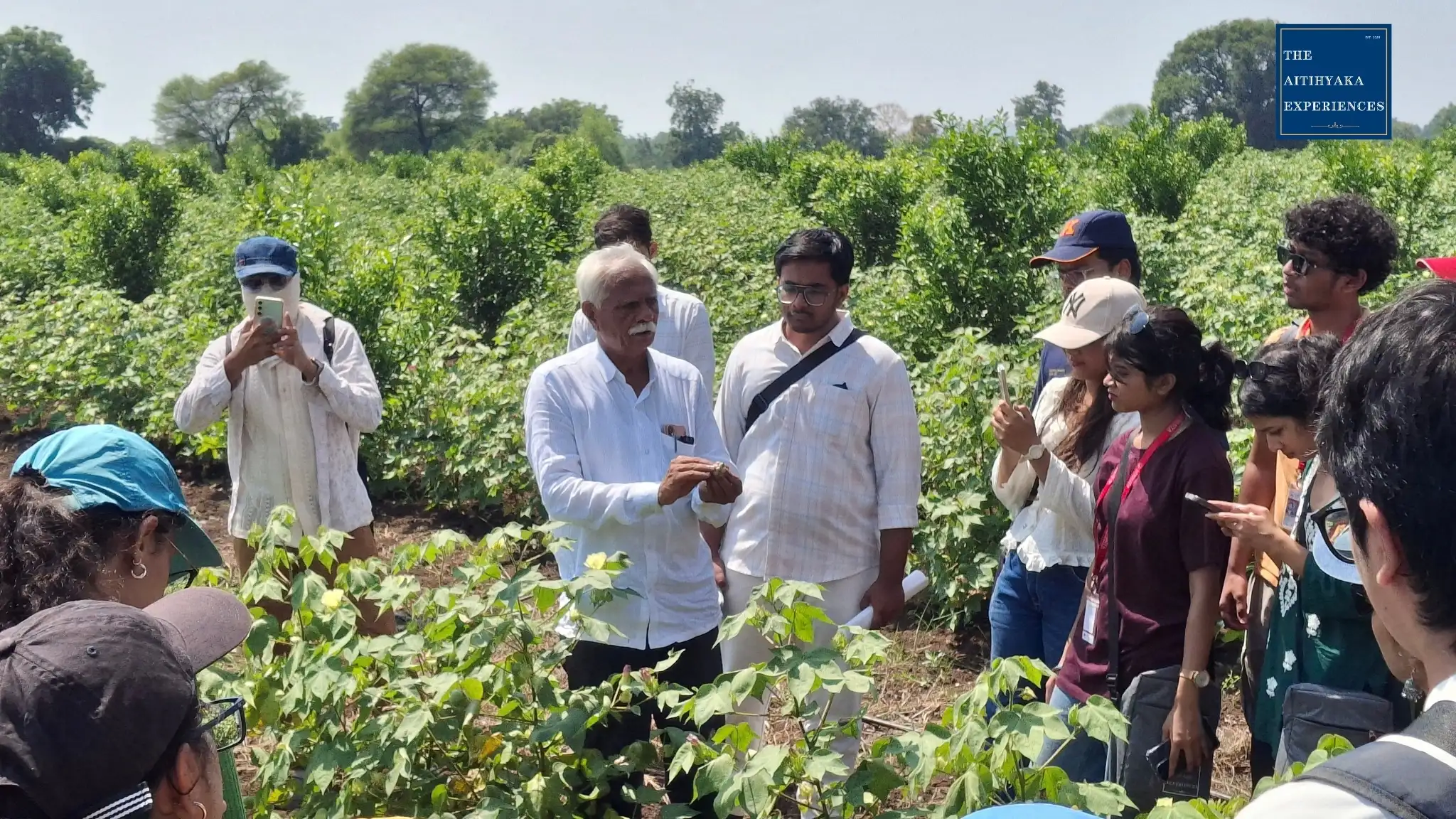
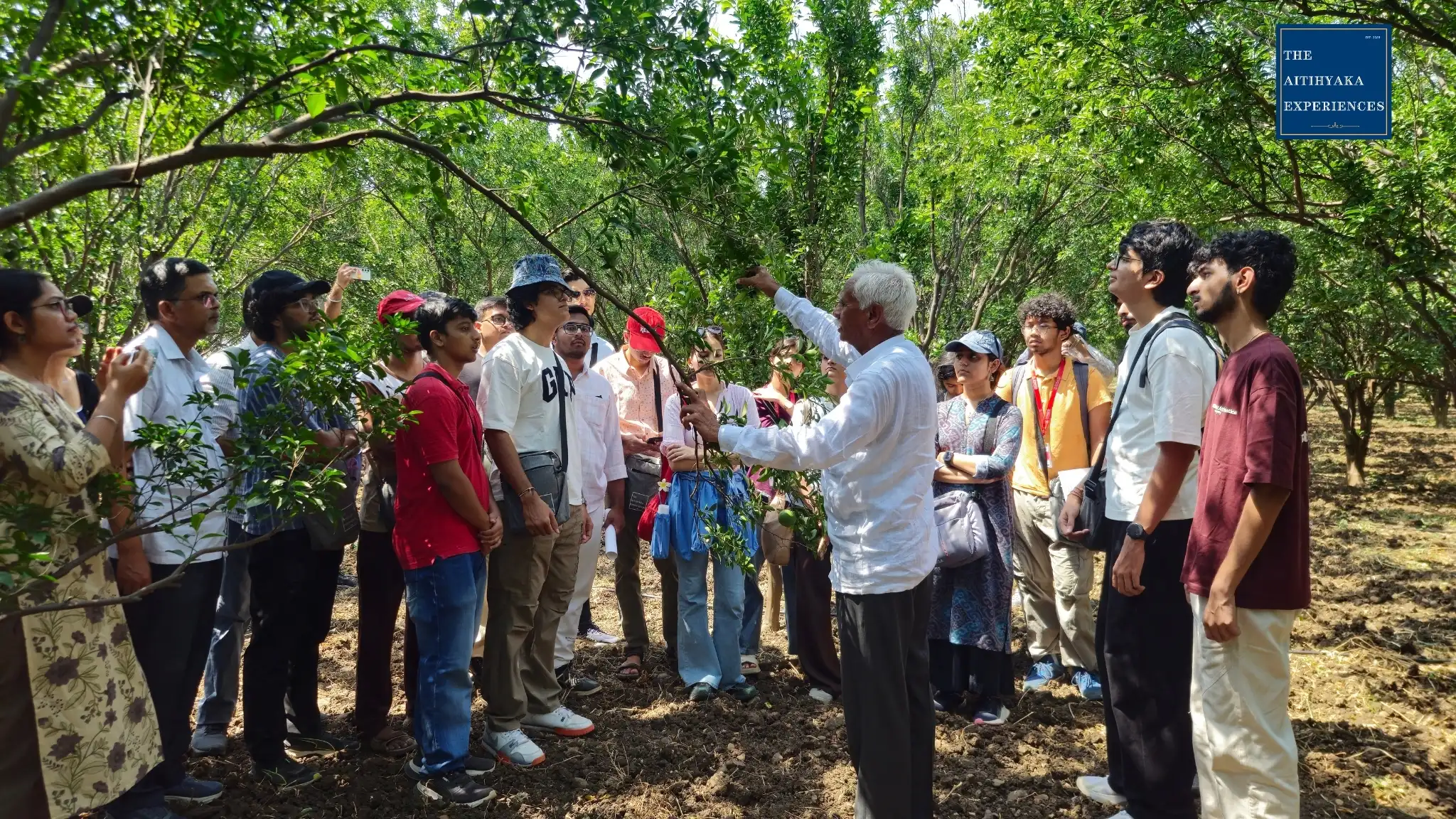
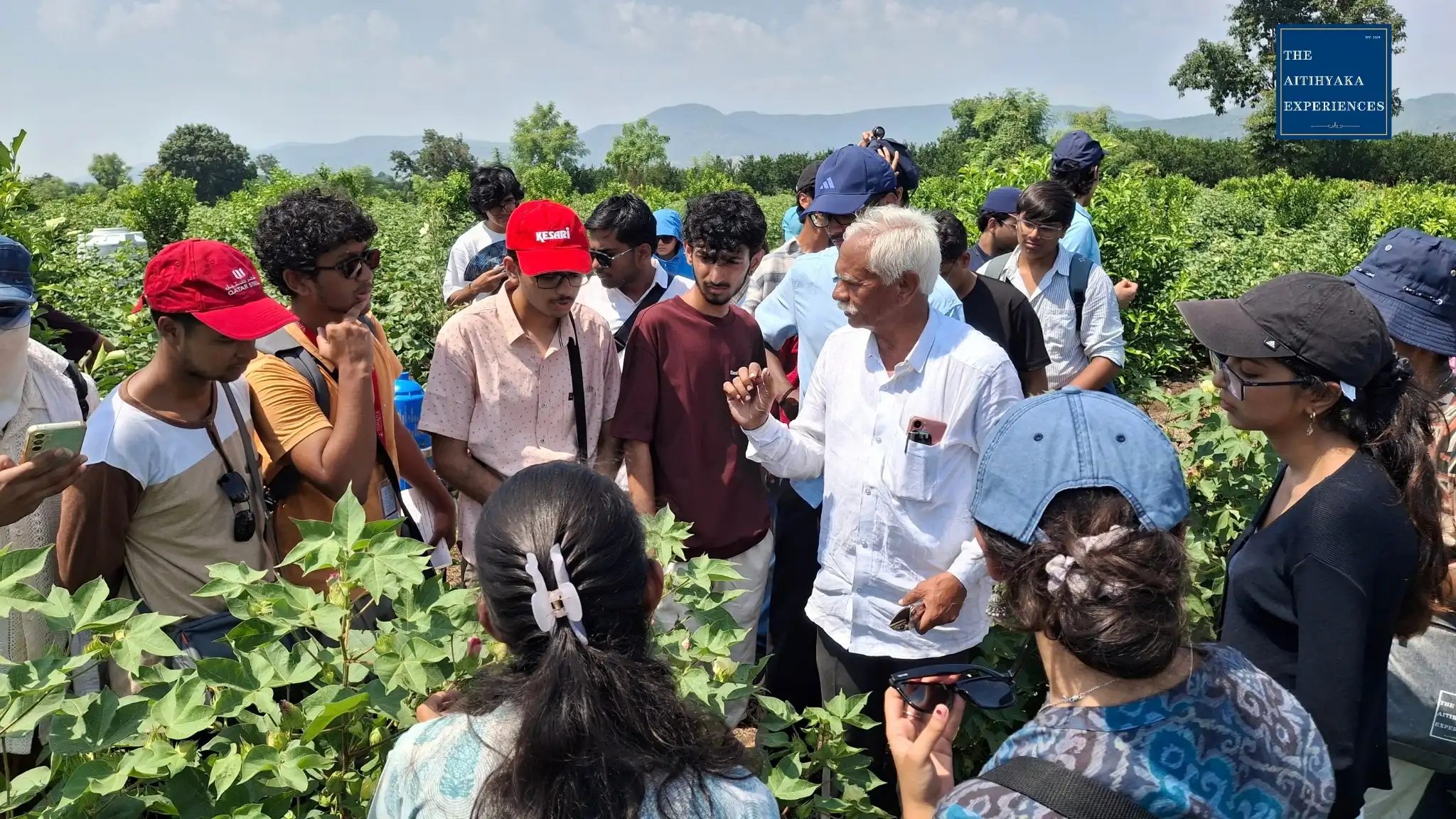
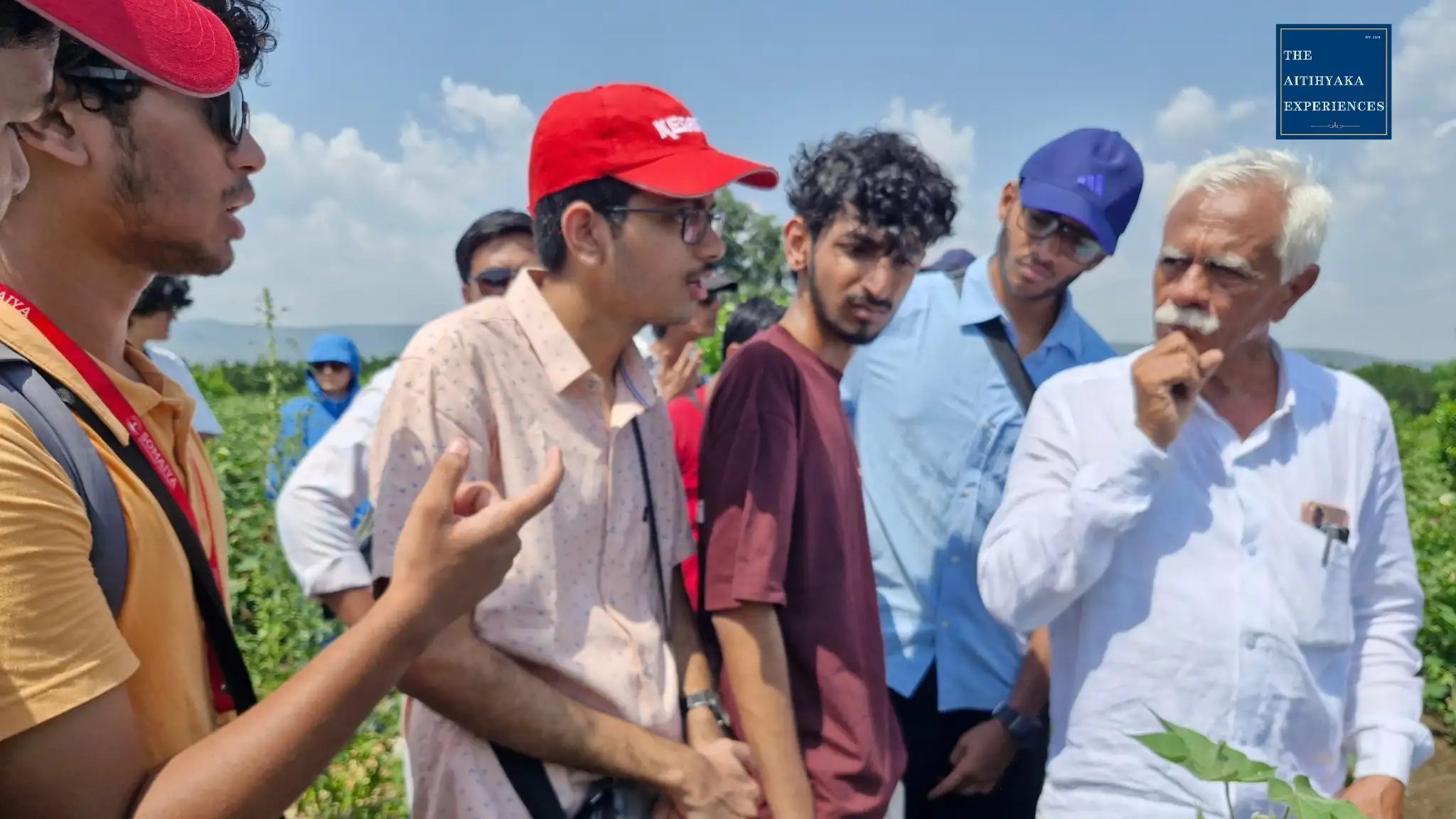
The programme concluded with a visit to an orange orchard in the Warud–Morshi region, where students explored the connections between agriculture, environmental conditions and local livelihoods.
Through orchard observation and a hands-on orange grafting activity, students learned about plant propagation and cultivation practices. The visit highlighted the role of agricultural knowledge, local expertise and environmental conditions in shaping farming practices and rural livelihoods.
Learning Through Field Engagement
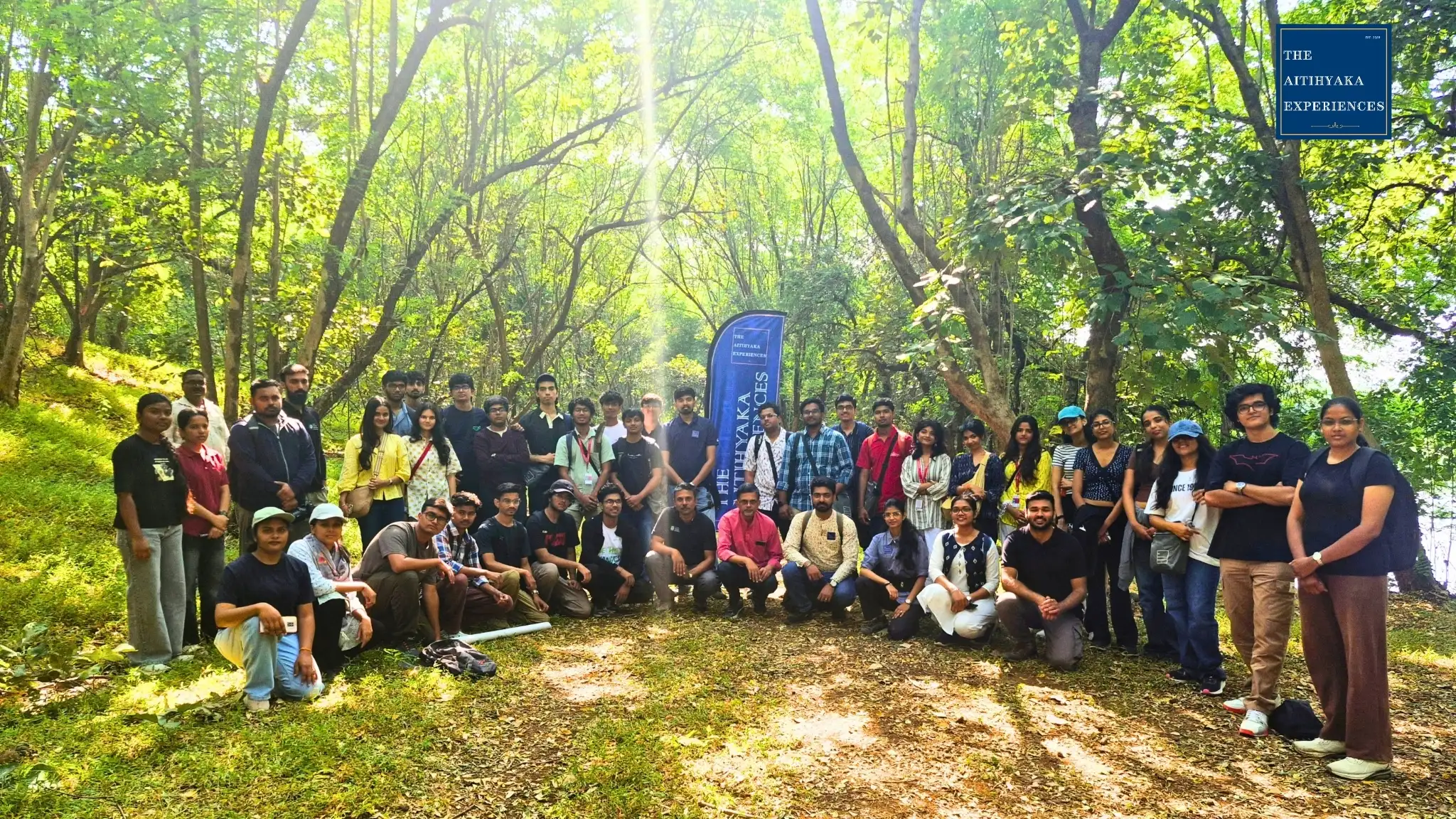
Across four days, Vidarbha Vistaar connected cultural heritage, water systems, rock art, forest ecology, wildlife conservation and agriculture through a shared focus on landscapes and human–environment relationships.
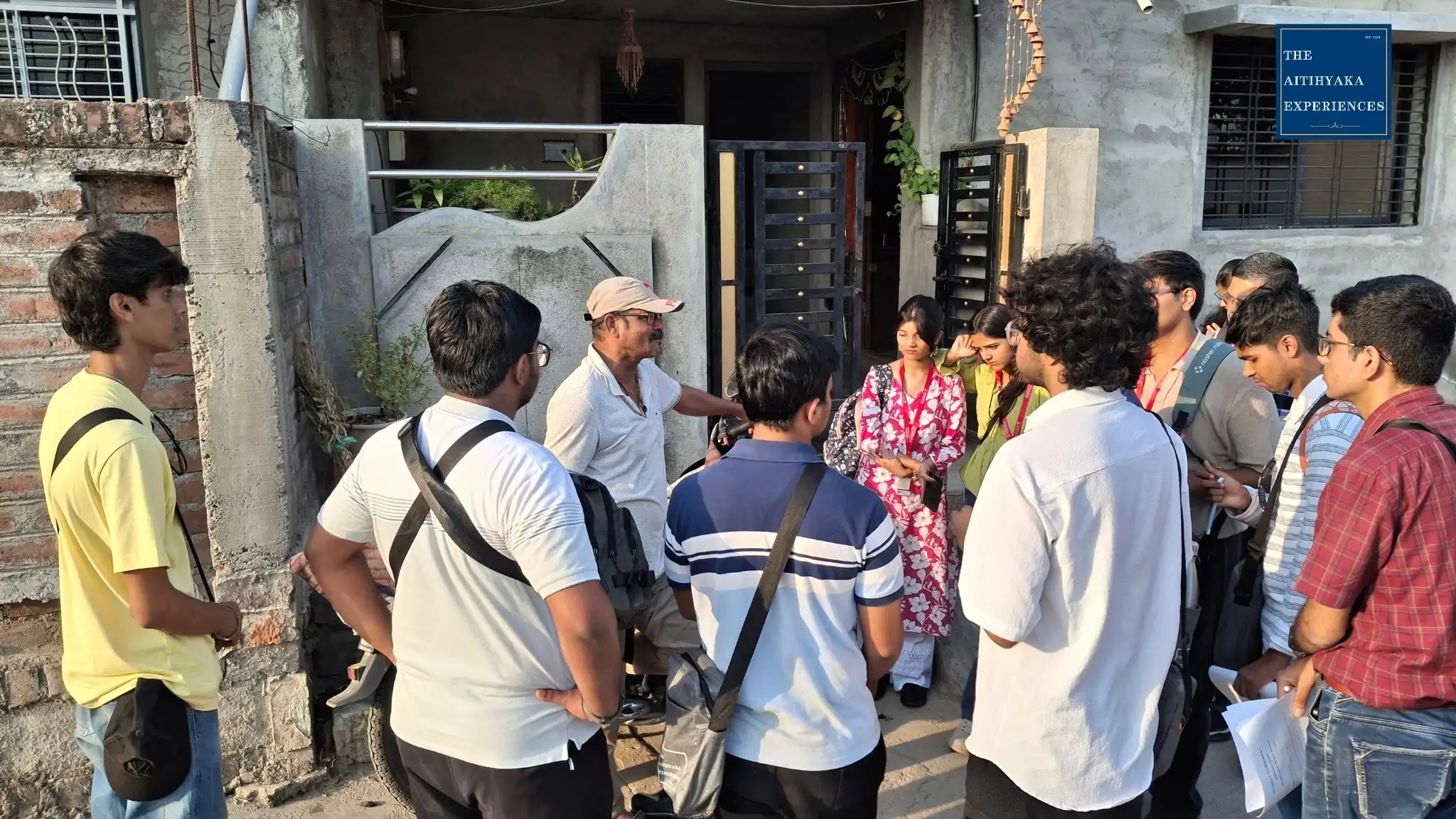
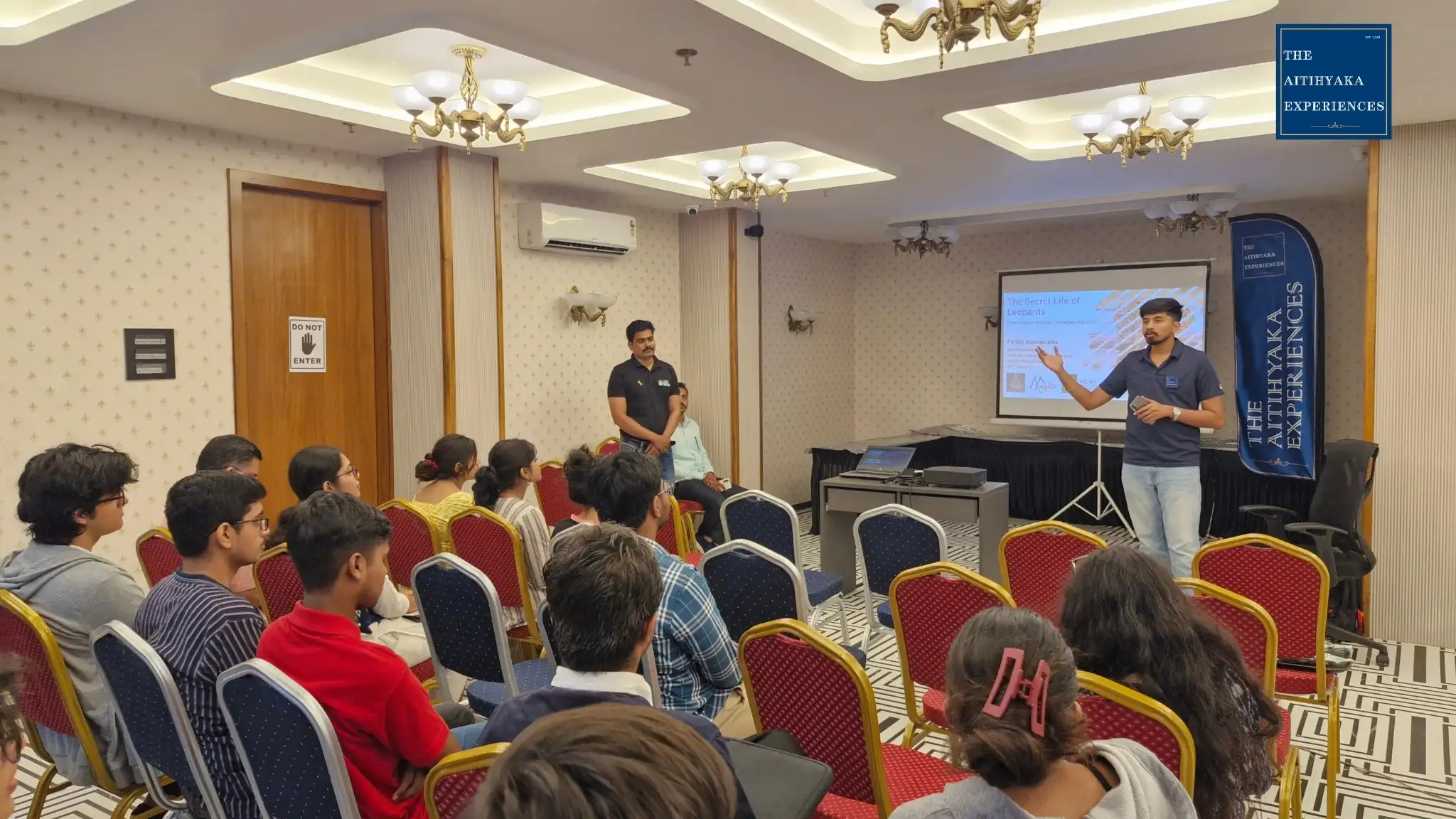
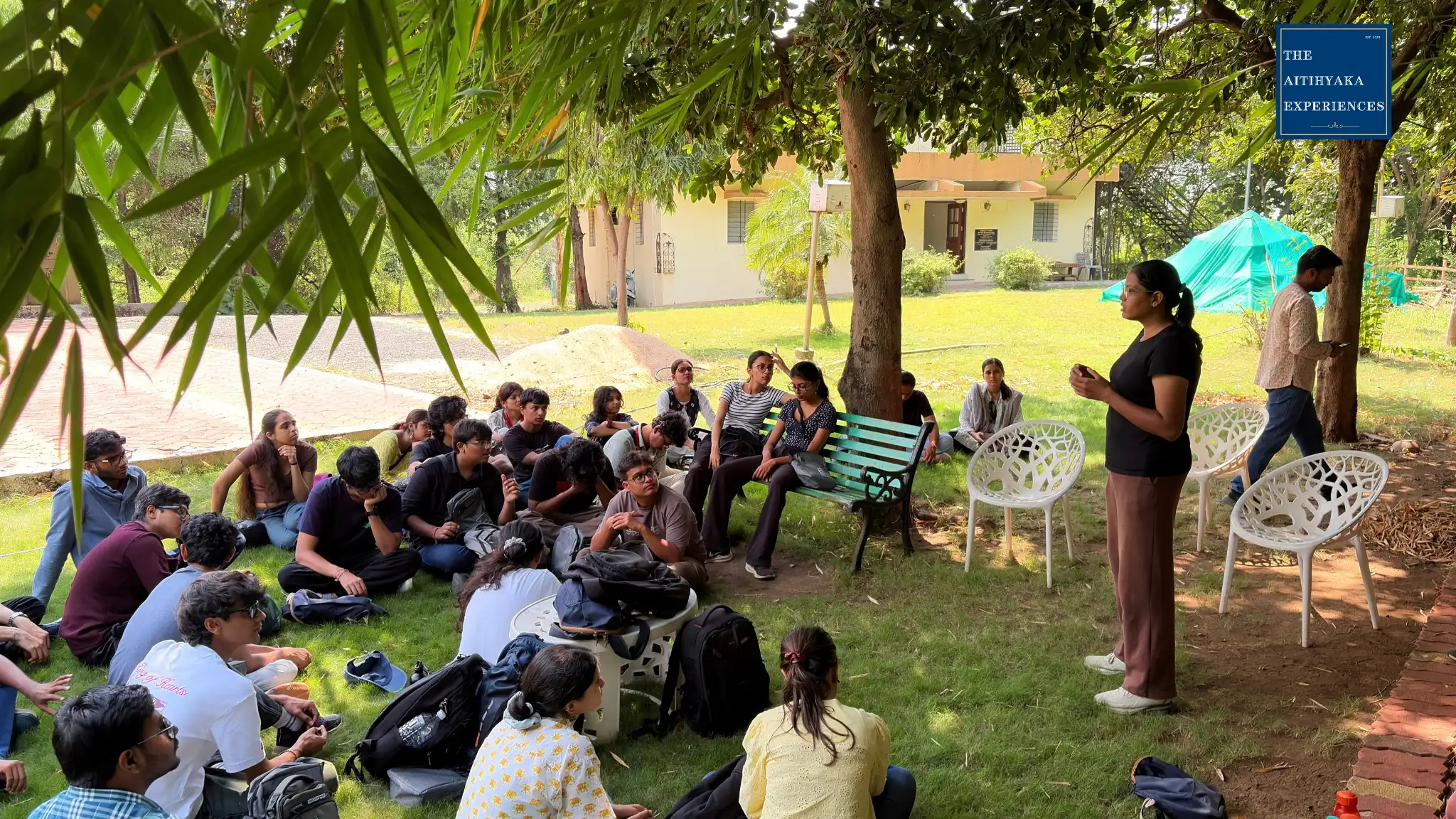
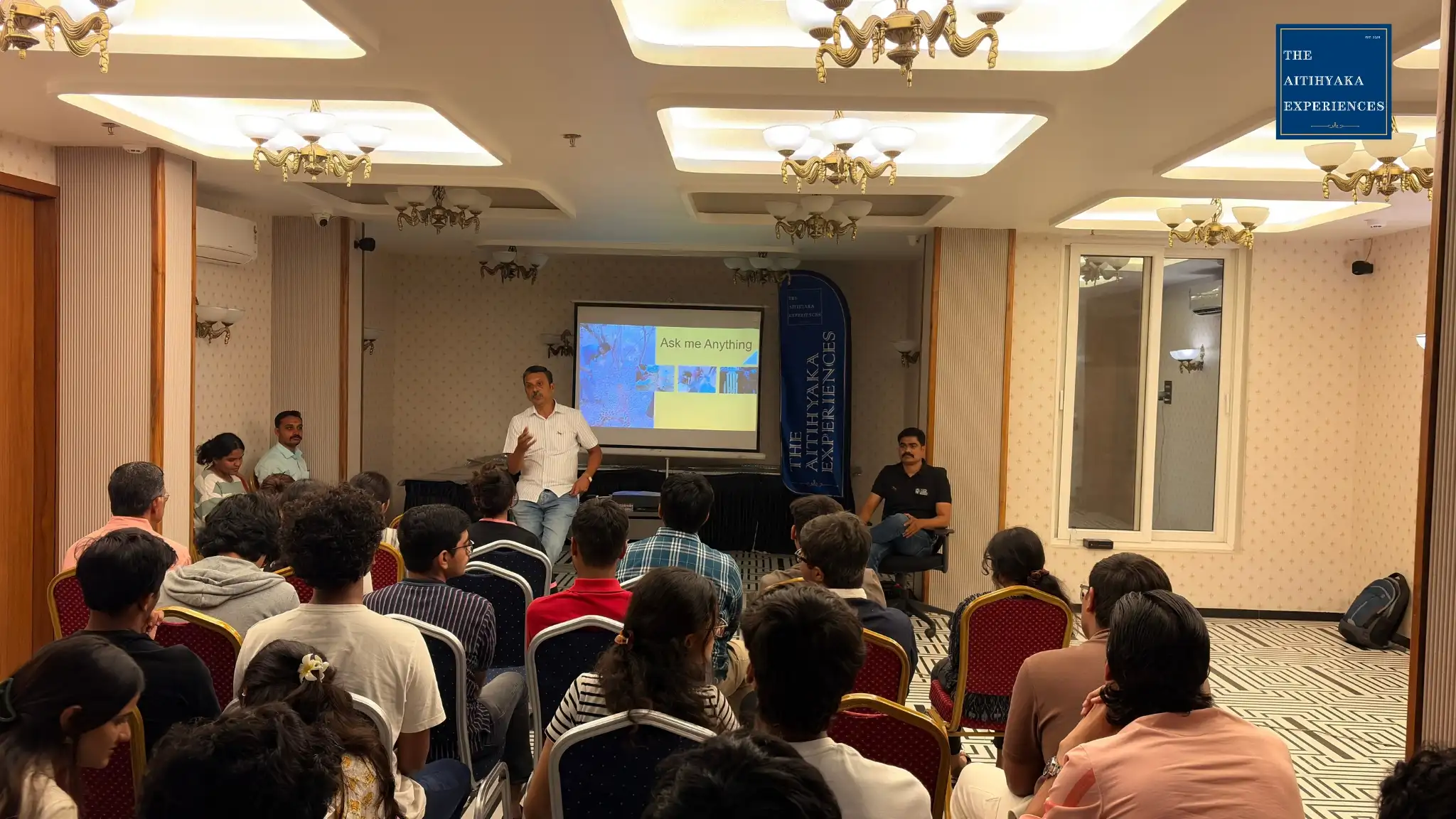
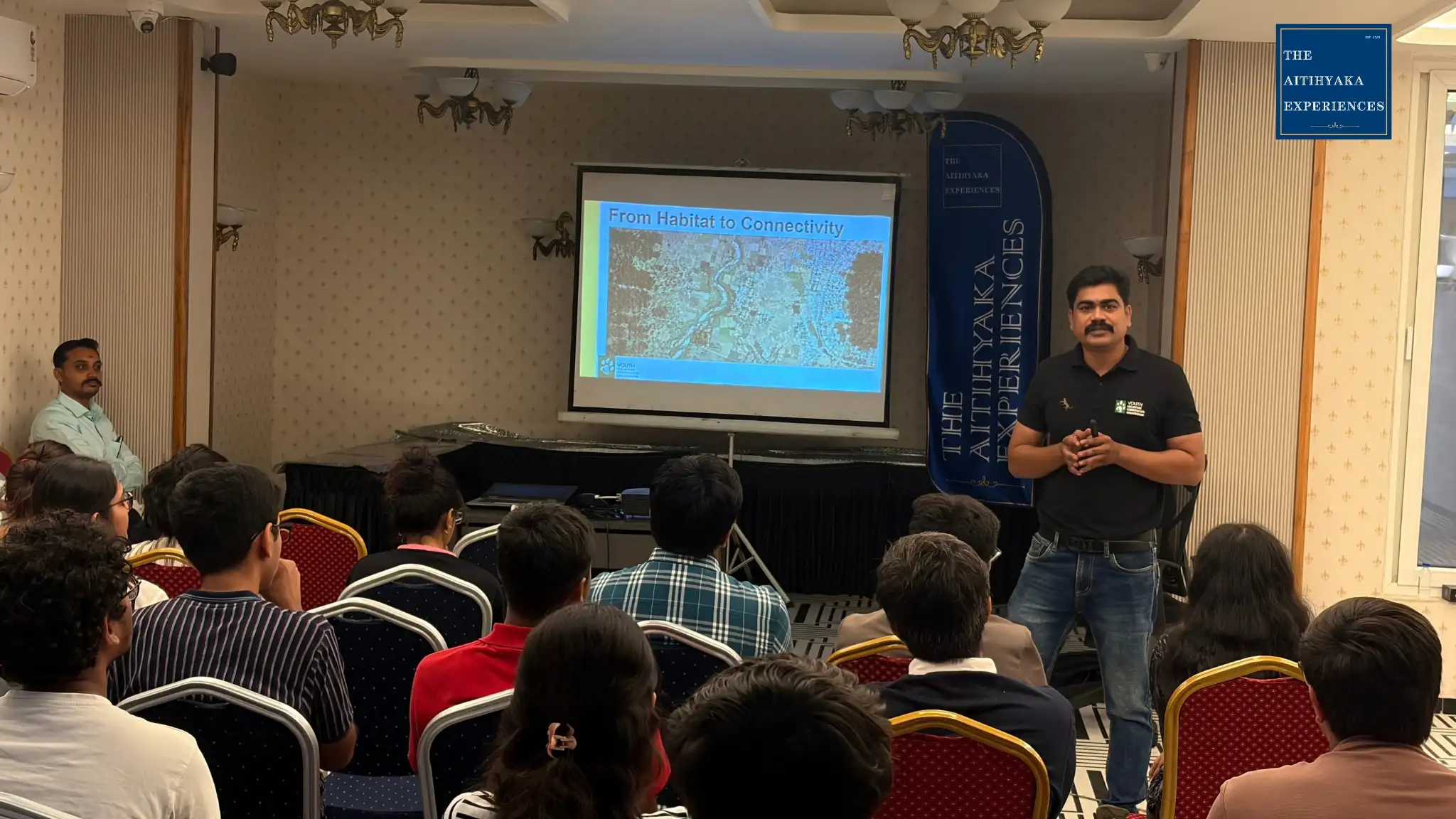
Interactions with subject experts, researchers, conservation practitioners and local knowledge holders enriched the learning experience. Structured field notes, group documentation and practical activities encouraged students to observe carefully, ask questions and connect academic concepts with real-world contexts.
The programme fostered field observation, interdisciplinary understanding, critical inquiry and awareness of heritage conservation and local knowledge systems.
Aitihyaka Experiences: Learning Beyond the Classroom
At Aitihyaka Experiences, we develop experiential learning programmes that connect history, cultural heritage, ecology and community knowledge through direct engagement with places and landscapes.
For Vidarbha Vistaar, Aitihyaka undertook programme design, coordination, delivery and experiential learning facilitation, bringing diverse themes together within a single field-based experience.
Conducted in collaboration with Somaiya Vidyavihar University and CASCADE, the programme demonstrated how interdisciplinary field learning can help students understand the relationships between culture, nature and society.
Vidarbha Vistaar explored Amravati as an interconnected landscape shaped by natural processes, cultural histories, local knowledge and human activity—reinforcing the value of learning through direct engagement with the world around us.