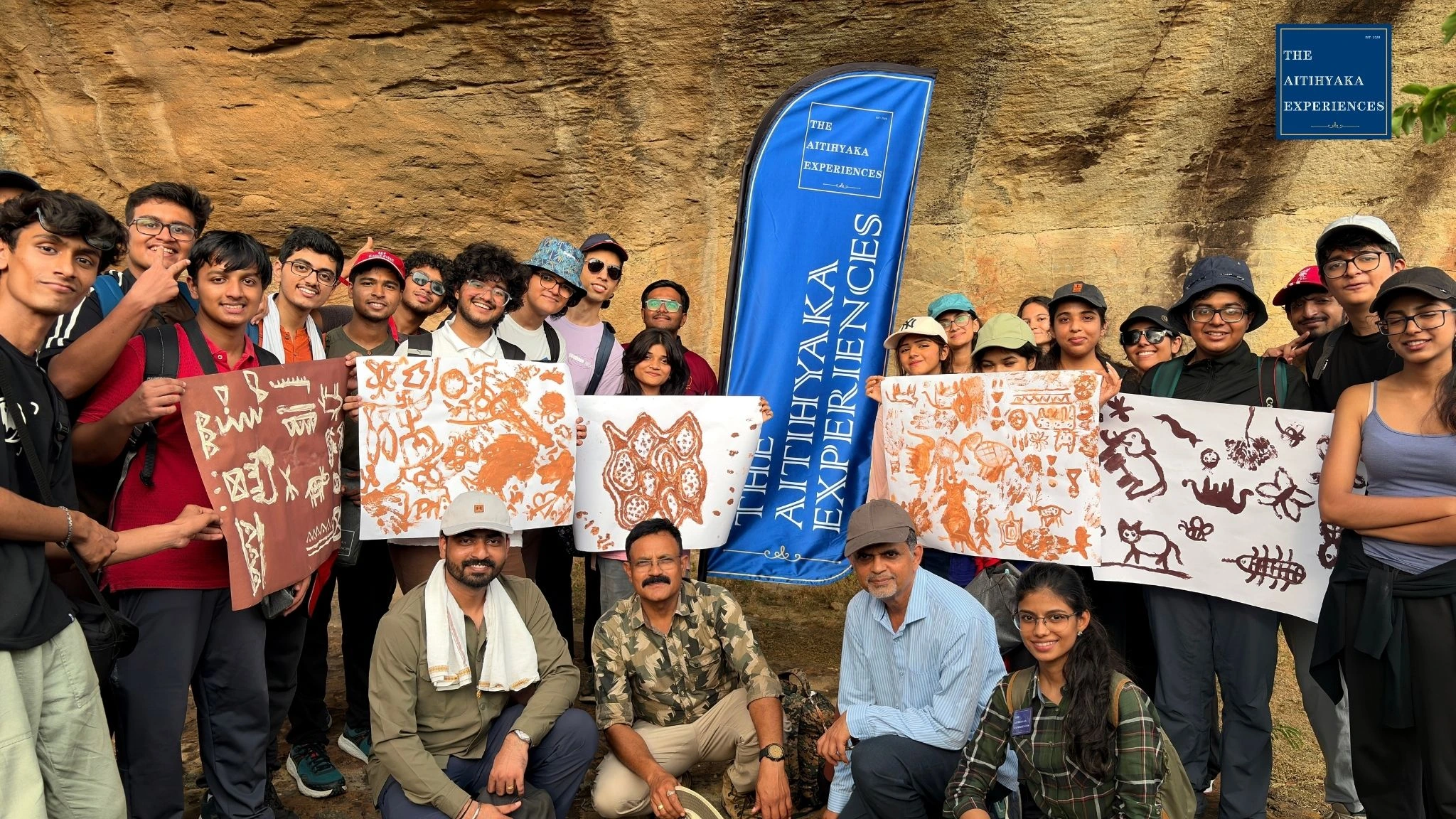
Vidarbha Vistaar – Exploring Forests, Water and Indigenous Systems of Amravati
A four-day experiential learning journey organised by Aitihyaka Experiences in collaboration with Somaiya Vidyavihar University and CASCADE, exploring Vidarbha’s cultural heritage, traditional water systems, prehistoric rock art, forest ecology, wildlife conservation, and agricultural livelihoods through field-based learning and expert interactions.
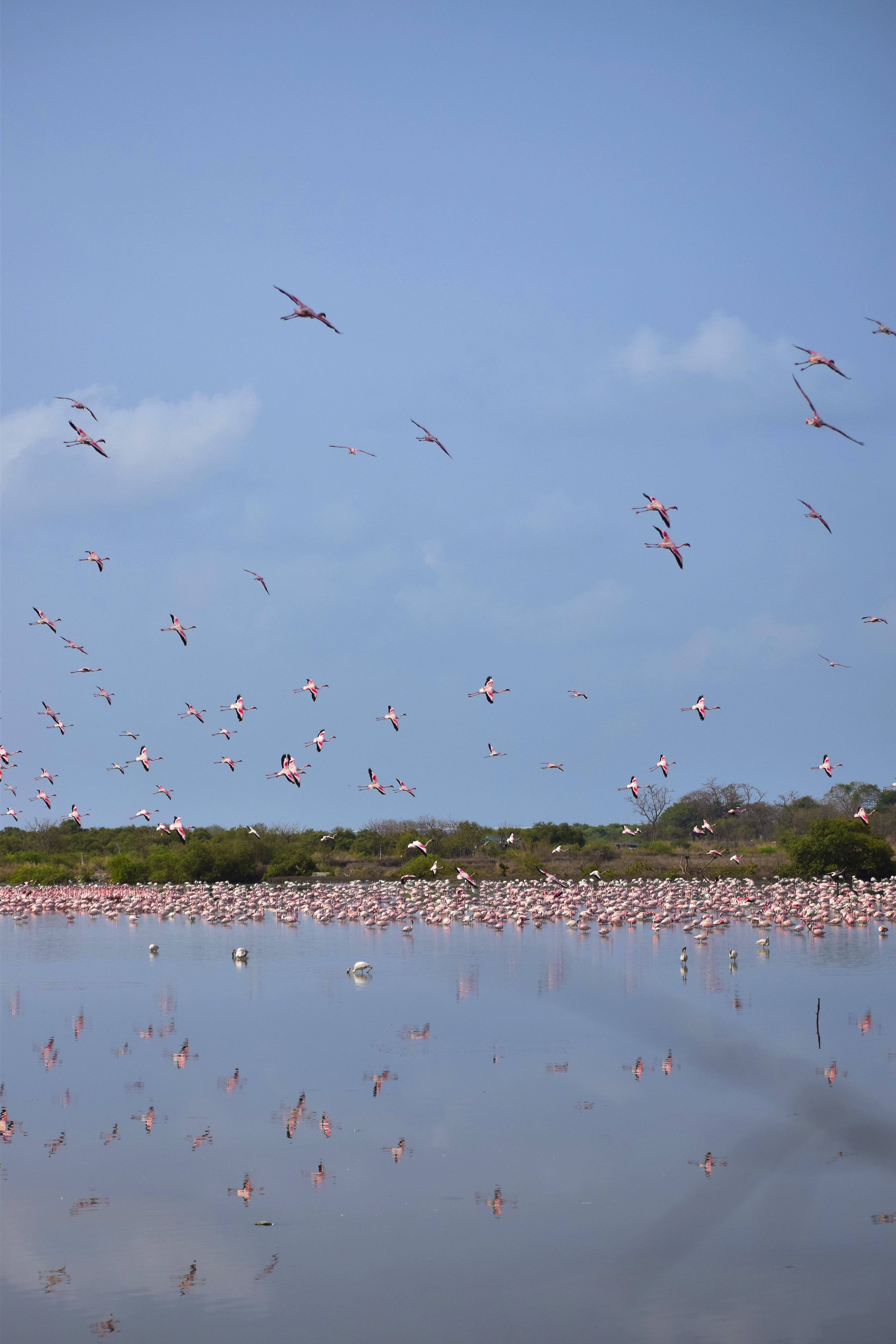
The Pink Phenomenon - Flamingos and Wetland Ecology in Mumbai
Each year, Mumbai’s coastal wetlands undergo a subtle yet significant transformation. What appears to be still, empty mudflats gradually becomes a dynamic ecological space as flamingos arrive in large numbers. This seasonal occurrence, often perceived as a visual spectacle, is in fact a direct outcome of complex interactions between tidal cycles, nutrient availability, and habitat conditions making it a powerful indicator of wetland health.
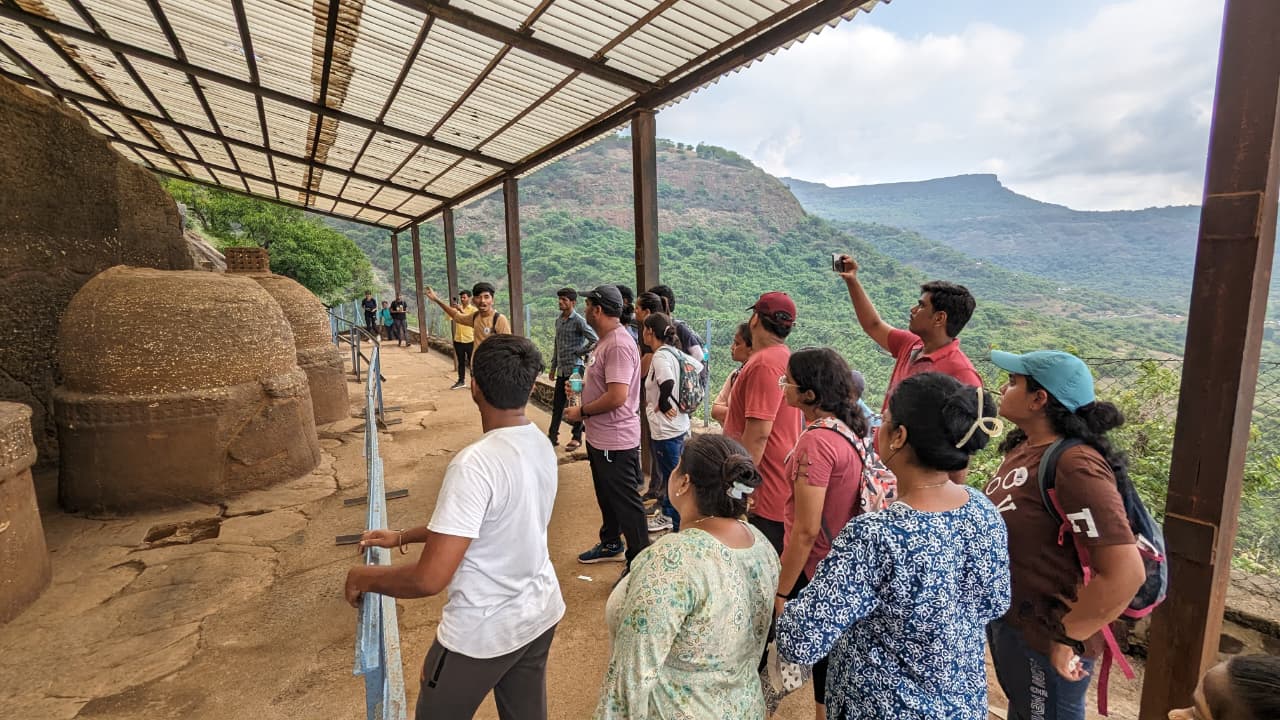
Heritage and Landscape Systems: Lohagad and Bhaja caves
A field-based experiential learning program in the Sahyadri ranges engaged with the historic landscape of Lohagad Fort alongside the early Buddhist rock-cut complexes of Bhaja. The engagement examined the fort within the context of Maratha strategic systems associated with Chhatrapati Shivaji Maharaj, while also studying the architectural and cultural significance of the cave sites in relation to ancient trade networks of the Western Ghats. Through on-site observation and interpretation, the program connected fort architecture, rock-cut traditions, and landscape systems, enabling participants to understand these sites as part of a larger historical and ecological continuum.
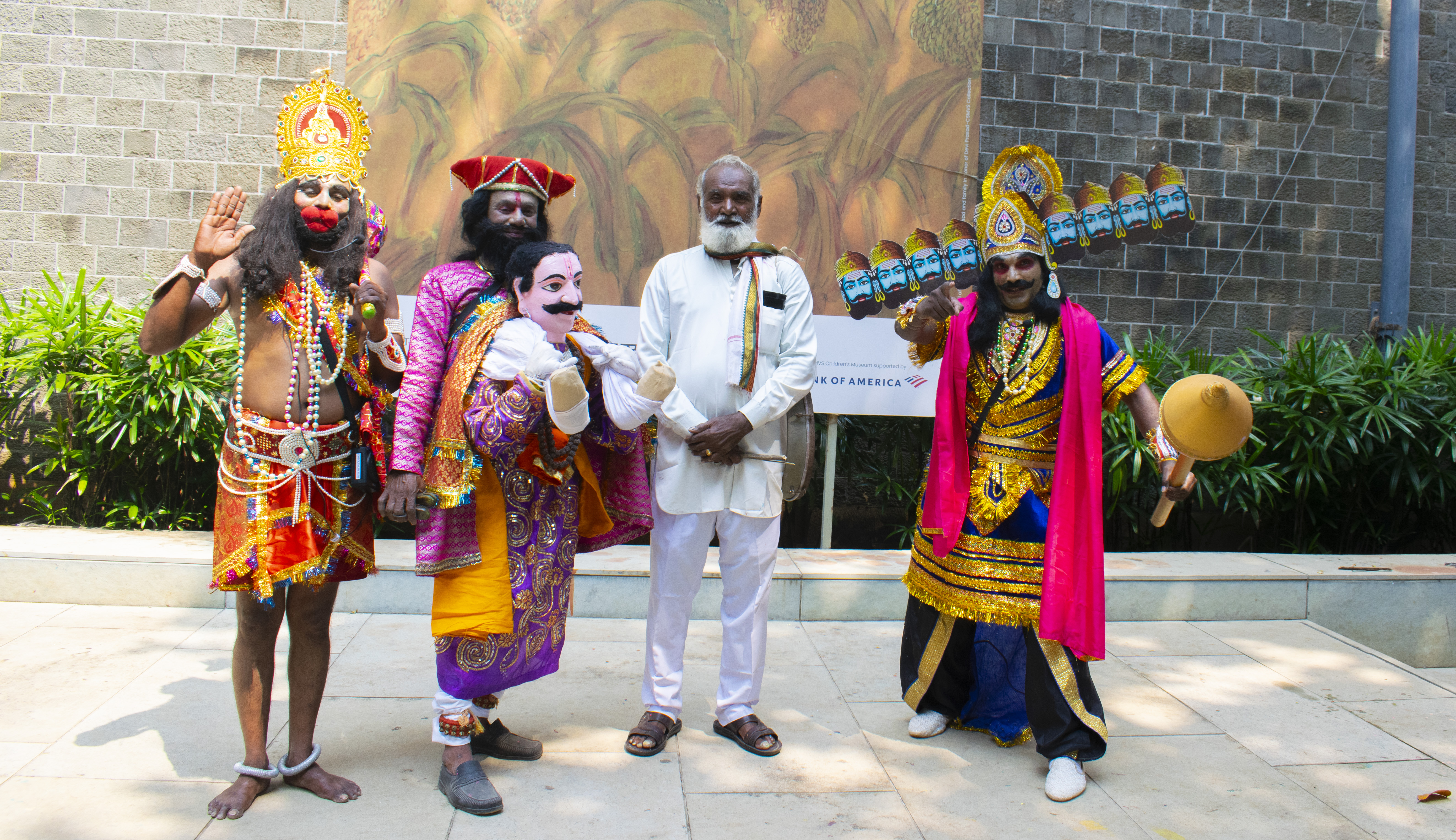
Interpreting Living Traditions: Bahurupi at CSMVS
A Bahurupi performance was facilitated at the Chhatrapati Shivaji Maharaj Vastu Sangrahalaya, bringing a living folk tradition from Vidarbha into the museum environment. Conducted through Narrative Trails, the engagement explored performance as a mode of interpretation, activating the gallery space and connecting audiences with ongoing cultural practices beyond static display.
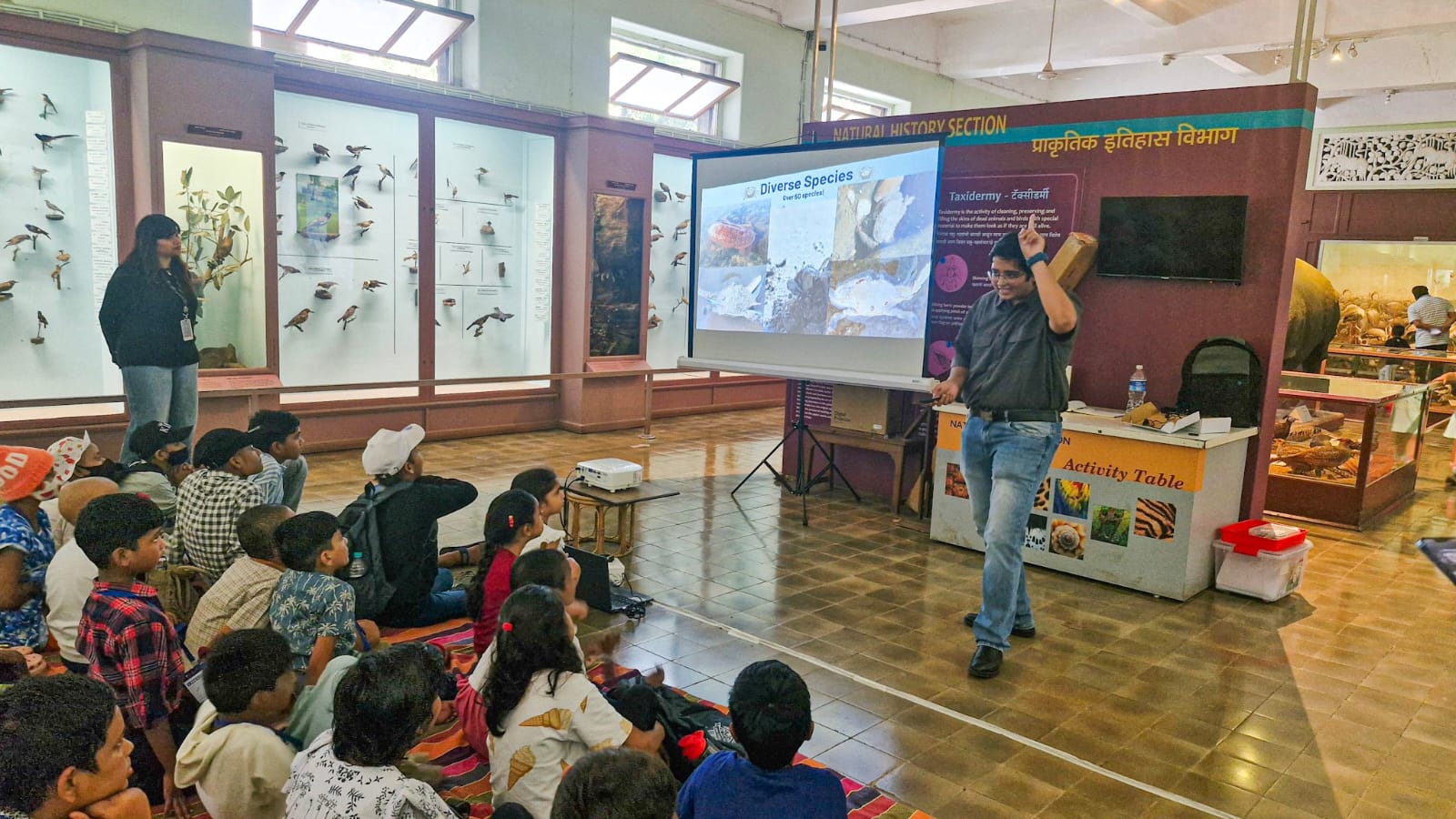
Marine Biodiversity of Mumbai: A Museum Engagement
A structured museum-based engagement introduced young participants to the marine biodiversity of Mumbai’s coastline. Conducted under the Children’s Museum at the Chhatrapati Shivaji Maharaj Vastu Sangrahalaya and held within the Natural History Gallery, the program was led by marine biologist Chahat Yadav. Using visual material, narrative, and interactive formats, the session built an understanding of coastal ecosystems, situating marine life within its environmental and urban context.
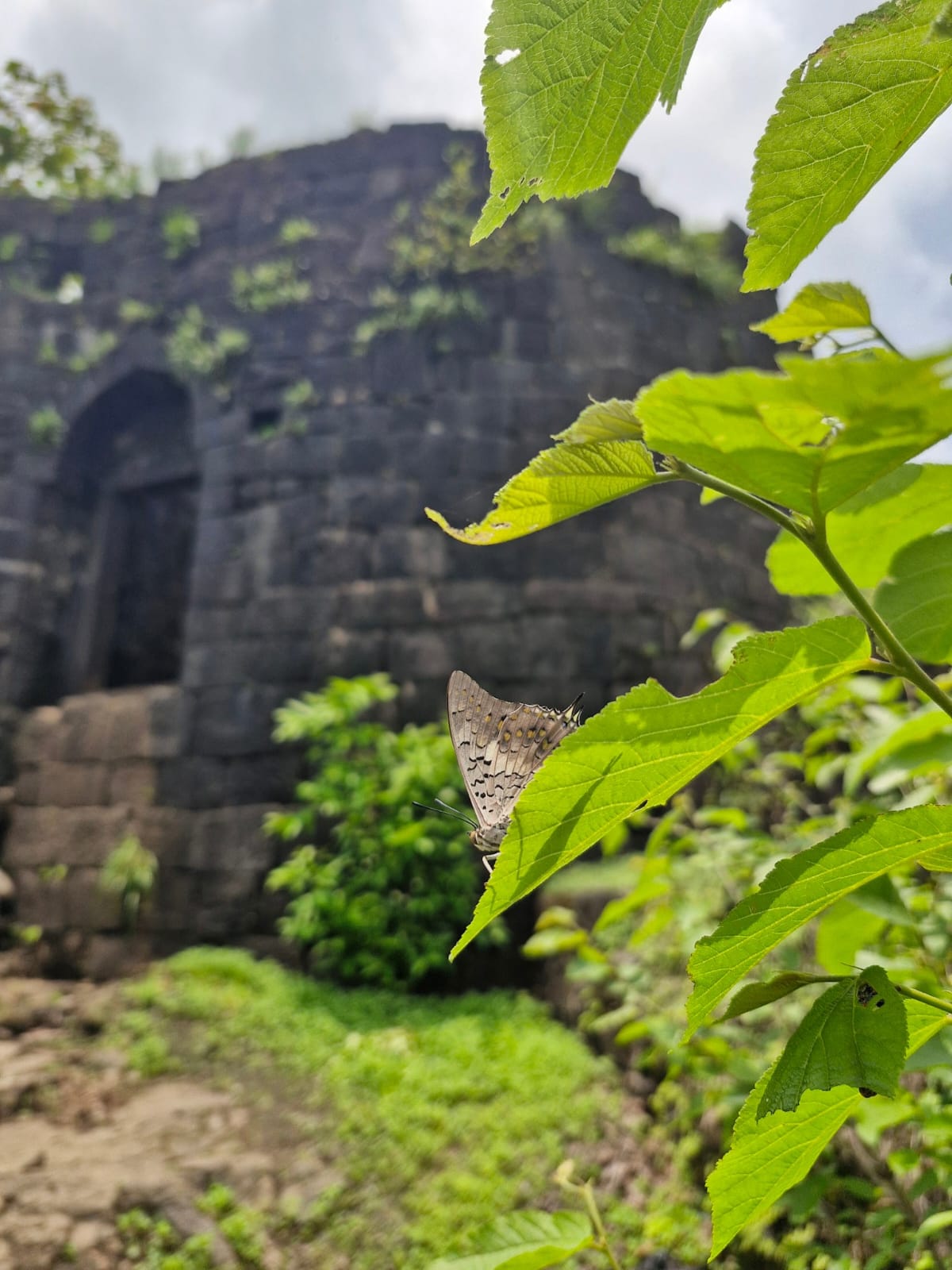
Karnala Bird Sanctuary and Fort: A Landscape-Based Engagement
Aitihyaka Experiences conducted a field-based engagement at Karnala, integrating the study of biodiversity systems with the historic fort landscape. The program connected ecological observation with heritage interpretation, enabling a contextual understanding of the site.
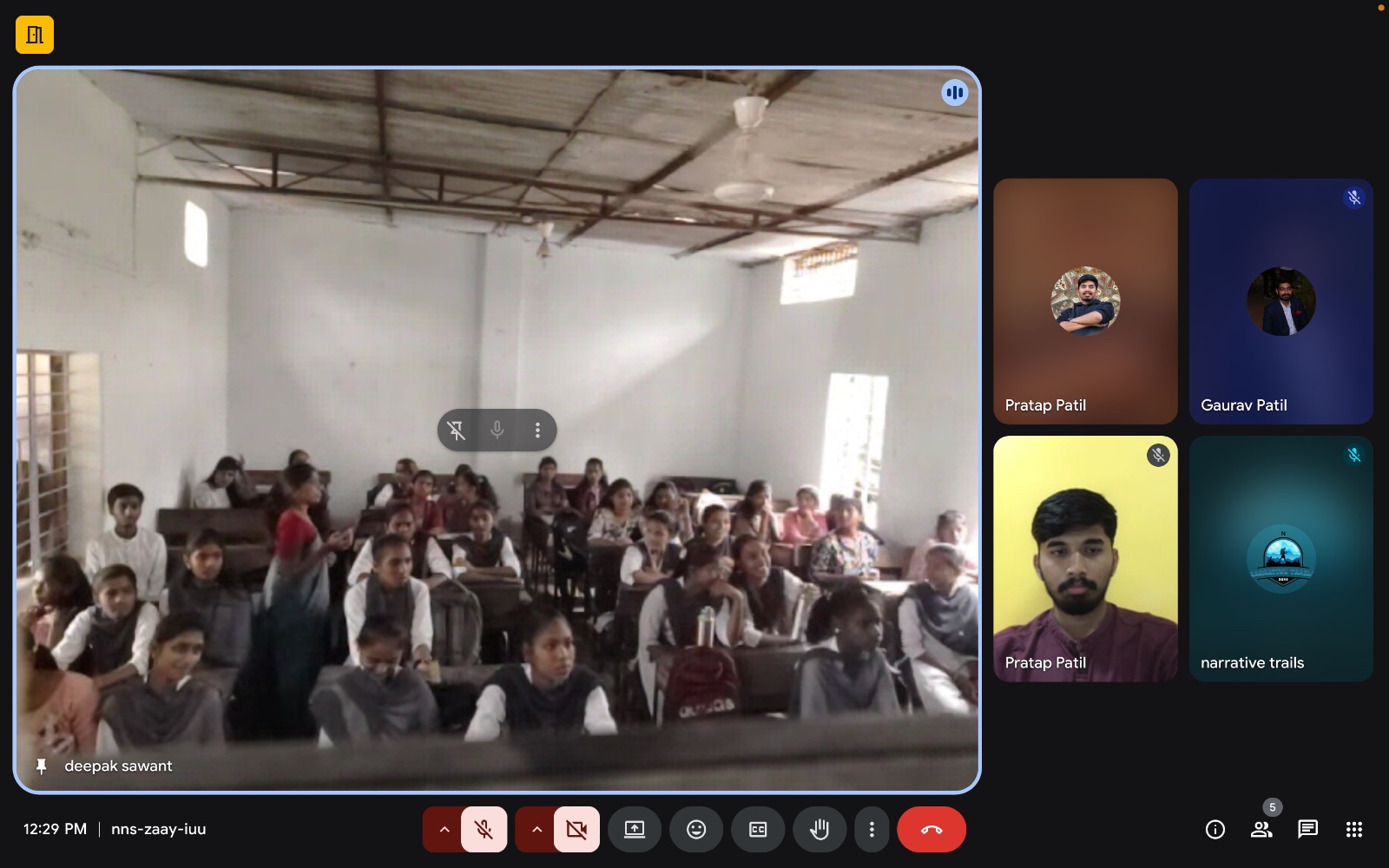
Interpreting the Maratha Military Landscape: UNESCO Engagement with NSS
A lecture engagement with NSS students explored the UNESCO nomination process of the Maratha Military Landscape, situating Maharashtra’s forts within broader global heritage discourse and examining their historical and strategic importance.